






















Fifty-two percent of customers switch to a competitor after a single bad experience with a brand. Multiple bad experiences push that number to seventy-three percent.1 Most of those experiences trace back to something a system already knew about — a slow page, a dropped call, a stalled checkout — long before the customer ever complained.
Customer satisfaction data tells you how someone felt about an interaction that already happened. Customer experience monitoring tells you, in real time, whether the systems behind that interaction are working — before the customer feels anything at all.

That gap — finding out after the fact versus knowing in real time — is where customer experience (CX) monitoring earns its place. It gives teams the data to prove what's working, catch what isn't, and act before a slow system becomes a lost customer.

CX monitoring does two things a satisfaction survey can't: it surfaces problems as they happen, and it surfaces the trend before that trend shows up in a survey score. Without that visibility, teams are working from anecdotes and support tickets — after the damage is already done.
What is customer experience, and why does it matter to your bottom line
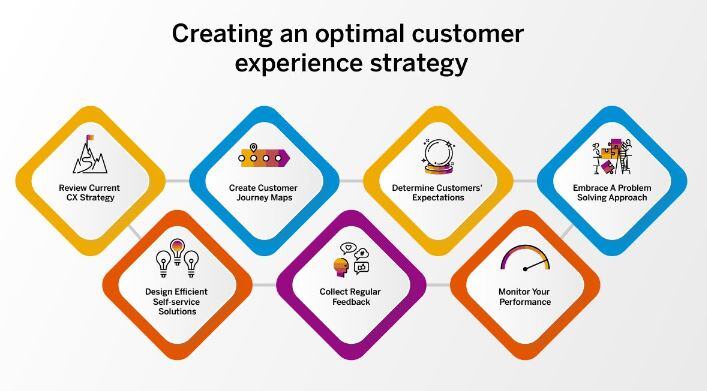
Five elements make up the experience. Miss the monitoring on any one, and the rest stop mattering as much.
There's a direct line between customer experience and revenue growth, and understanding it starts with breaking "customer experience" into the parts you can actually measure and monitor with the right tools:
-
Customer acquisition — the process of bringing in new clients or customers.
-
Customer journey — the path of interaction a customer has with your brand, product, or service.
-
Customer interactions — the individual communications and engagements between company and customer.
-
Customer satisfaction — how happy or unhappy customers are with your products, services, or support.
-
Customer loyalty — the strength of the connection between a customer and your brand.

Find out more about enhancing your customer experience with digital experience monitoring
The real value of monitoring the customer experience
Better CX isn't a feel-good metric. It shows up in retention, revenue, and cost to serve.
Companies that lead on customer experience don't just get better reviews — they compound an advantage. A 5% improvement in customer retention can lift profits by 25% to 95%, because retained customers cost less to serve and buy more over time.2 The global customer experience management market reflects the same shift in priority: it's forecast to reach USD 32.87 billion by 2030, growing at roughly 15.8% a year.3

The customer-centric case for monitoring
CX monitoring is partly about collecting performance data — but what you do with that data is what counts. It gives organizations actionable insight into customer journeys: who had an exceptional experience, and who hit friction along the way.
It works by tracking, analyzing, and interpreting customer interactions across digital and voice channels, human interaction, and self-service. Done well, it improves service quality and protects brand reputation before a problem becomes a review.
Platforms like IR Collaborate provide real-time analytics dashboards that give contact center and IT teams visibility into customer behavior, preferences, and pain points as they happen — not after a survey closes.

Image source: Survey Sparrow
Data-driven decisions, not guesswork
Without customer data, product and service improvements are guesses. Analyzing feedback and behavioral data helps organizations spot the pain points customers hit repeatedly, address them, and improve retention as a result.

Personalizing every interaction
Behavioral data lets you personalize communications — targeted messaging, promotions, and recommendations — based on what customers actually do, not what you assume they want. McKinsey research on personalization puts the payoff at up to 25% revenue growth for mature programs, alongside customer acquisition costs cut by as much as 50%.4
Support that gets ahead of problems
Real-time insight surfaces recurring issues before they pile up in a support queue, so teams can fix the underlying cause instead of the tenth symptom. Optimizing self-service options in response to that data also cuts frustration and response times for the customers who'd rather not call in at all.
The churn math that makes monitoring non-negotiable
Your profitability depends heavily on your ability to retain existing customers. Some churn is inevitable, but a high churn rate erodes the bottom line fast — which is exactly why CX monitoring needs to track it continuously rather than quarterly.
"A customer review tells you what already went wrong. Monitoring tells you what's about to."
How customer experience monitoring actually works
Two disciplines, two different jobs — most teams need both.
Synthetic transaction monitoring (STM)
Synthetic Transaction Monitoring is the proactive half of experience monitoring. It uses simulated transactions to test the functionality, performance, and usability of a website or service — logging in, loading a page, adding to a cart — the same way a real customer would, but before a real customer does it.
Unlike real user monitoring, STM doesn't wait for a customer to hit a problem. It actively walks the journey real customers take, which is exactly what makes it useful for catching a broken step before it reaches an actual transaction and your bottom line.
Application performance monitoring (APM)
APM is the other half. It watches the systems underneath the experience — gathering performance metrics, flagging degradation, and confirming applications are running the way they're supposed to — so a slow backend doesn't quietly become a slow customer experience.
Find out more about APM
The text below explains what each approach tests and where it stops:
| Dimension | Synthetic transaction monitoring | Application performance monitoring |
|---|---|---|
| What it tests | The customer-facing journey — login, checkout, page load | The application and infrastructure behind that journey |
| How it works | Simulated transactions, run continuously, before real customers act | Live performance metrics from the running application |
| Best for | Catching a broken step before a real customer hits it | Root-causing why a step is slow or unavailable |
Neither replaces the other — STM tells you a journey is broken, APM tells you why. Run together, they close the loop between what the customer experiences and what caused it.
The metrics that make CX monitoring measurable
What you can't measure, you can't improve.
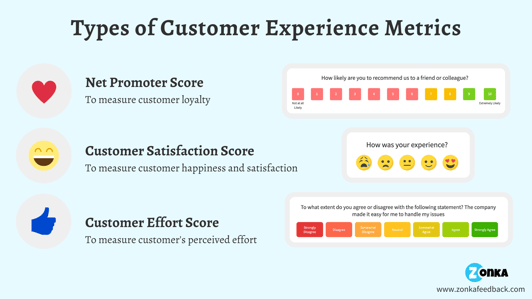
Any organization undergoing digital transformation needs a clear view of customer interactions, behaviors, and satisfaction — pulled from websites, mobile apps, social channels, surveys, and in-store visits alike. Three metrics do most of the work:
| Metric | What it measures |
|---|---|
| Net Promoter Score (NPS) | How likely a customer is to recommend you to others |
| Customer Satisfaction (CSAT) | How well a product or service met — or missed — expectations |
| Customer Effort Score (CES) | How easily a customer got their issue resolved or need met |
None of these three is the full picture on its own — used together, they show not just whether customers are happy, but why, and how much effort it took to get there.
How IR Collaborate can help
Real-time visibility across voice, web, and video — before customers notice a problem.
Delivering a great customer experience depends on your marketing channels, contact center technology, and web applications working every time — not most of the time. IR Collaborate gives teams the real-time monitoring insight to close that gap, with visibility into the systems that sit underneath every customer interaction.
With IR Collaborate, you can:
-
Deliver a consistent customer experience
Get detailed, real-time insight into voice, web, and video availability, performance, and quality of service. -
Test voice, web, and video under real-world conditions
Verify capacity, performance, stability, and resilience before a change goes live. -
Deploy new technology with confidence
Test outside-in, end-to-end performance before go-live, instead of finding out from your customers. -
Solve problems before they reach customers
Get automatic alerts that pinpoint issues like system unavailability, long response times, packet loss, jitter, latency, and picture quality.
Frequently asked questions
- What is customer experience (CX) monitoring? It's the practice of tracking, analyzing, and acting on data from customer interactions across digital, voice, and in-person touchpoints, in real time — as distinct from satisfaction surveys, which capture how a customer felt after the fact.
- How is CX monitoring different from a satisfaction survey? A survey reports on an interaction that already happened. Monitoring watches the systems behind the interaction continuously, so problems can be caught and fixed before they reach a customer at all.
- What's the difference between synthetic monitoring and real user monitoring? Synthetic monitoring simulates a transaction to test a journey before a real customer takes it. Real user monitoring measures what actually happened to real customers. Most mature CX programs run both.
- Which metrics should I track first — NPS, CSAT, or CES? They answer different questions: NPS measures loyalty, CSAT measures satisfaction with a specific interaction, and CES measures how much effort it took. Track all three; none alone tells the full story.
- How does application performance monitoring (APM) relate to customer experience? APM monitors the infrastructure and applications underneath the customer journey. When APM flags a slow or failing system, it's very often the direct cause of a poor customer experience upstream.
- How fast can CX monitoring show ROI? Because a 5% improvement in retention can lift profits by 25–95%, even modest reductions in churn or faster incident resolution tend to show measurable payback within one to two quarters — faster where contact center or transaction volume is high.
Conclusion
Customer satisfaction scores will always tell you what already happened. The organizations pulling ahead are the ones that stopped treating that as good enough — they're watching the systems behind the experience in real time, and fixing the slow page or dropped call before it ever reaches a survey. That's not a bigger investment in customer service. It's a different relationship with the word "before."