






















Every new client an MSP takes on doesn't add one more system to watch — it adds an entire stack. Different SBCs, different carriers, different contact center platforms, different SLAs. Multiply that across a growing client base, and "keeping an eye on things" stops being a job a handful of disconnected tools can do well.
That's the problem a recent IR webinar on monitoring for managed service providers set out to unpack. Here's what came out of it — and what MSPs evaluating their own monitoring strategy should take from it.
Want to know more? Watch the full webinar.
The complexity MSPs are actually managing
One customer's dashboard is manageable. Every customer's, on a different stack, isn't.
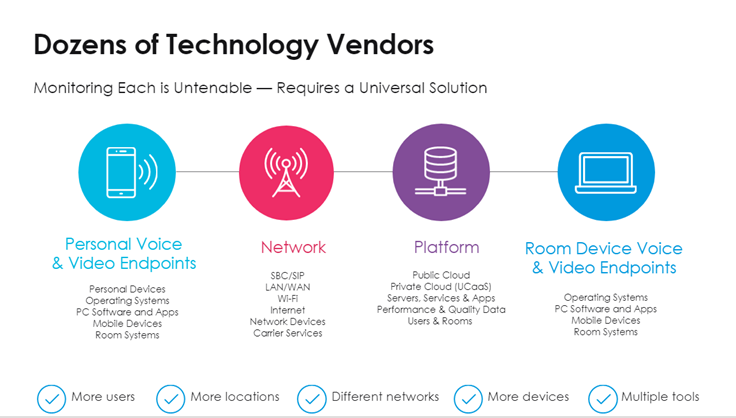
Each customer an MSP supports runs its own combination of platforms, versions, and configurations. Multiply the monitoring surface by client count, and the job stops looking like IT monitoring and starts looking like running dozens of separate IT departments at once — each with less visibility than a full-time in-house team would have.
Using a separate, disparate tool for each customer, platform, and layer isn't a workaround anymore — it's the actual bottleneck. Every additional tool means another login, another alert queue, and another blind spot at the handoff between them.
On-premises vs. cloud: what actually changes for MSPs
The infrastructure decision is really a speed-to-revenue decision.
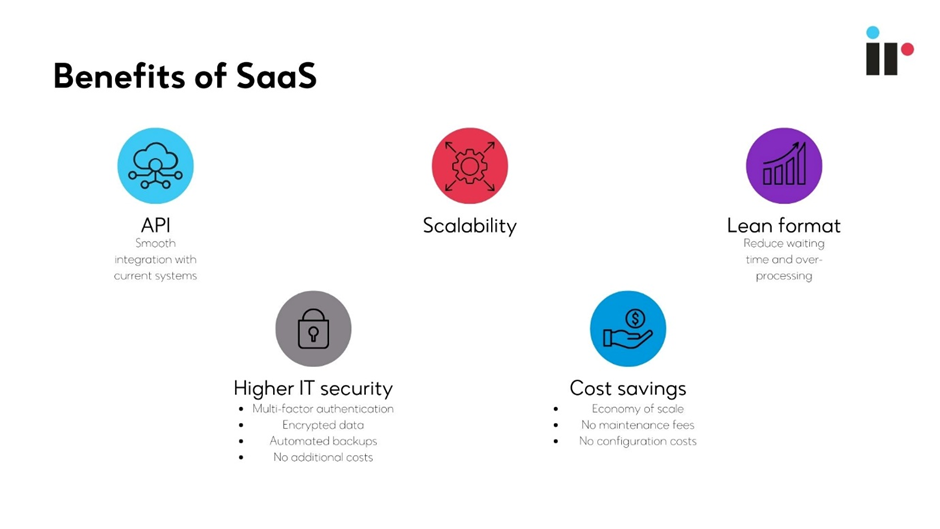
The webinar's central trade-off was on-premises vs. cloud-delivered monitoring. On-premises puts the MSP in charge of every layer — installation, patching, capacity, uptime — which means full control, but also full responsibility for the platform itself, on top of everything already being managed for customers. It still makes sense where clients operate in tightly controlled or data-residency-sensitive environments.
For most managed service providers building out their broader software stack, though, cloud-delivered solutions solve the more common constraint: getting a new customer live fast. Cloud lifts platform maintenance off the MSP's own team, scales with the client base instead of forcing infrastructure investment ahead of demand, and typically reduces the total cost of running the monitoring layer itself.
Why visibility has to be end-to-end
A gap in visibility anywhere in the stack is a gap in accountability everywhere.
Whether it's an enterprise application or the personal productivity tools sitting on top of it, the same layers are doing the work: hosting, network, servers, virtualization, operating system, application, and user configuration. MSPs are responsible for all of it, for every customer, at once.
Losing visibility into any one of those layers means losing the ability to say with confidence where a problem actually sits — which matters most in multi-vendor environments, where each client runs a different mix of platforms and no single vendor's own tooling can see across the boundary. End-to-end visibility is what turns "something's wrong" into "here's exactly what's wrong, and here's the fix" — and that's what keeps SLAs intact, not just uptime dashboards.
What's next: from reporting to predicting
Most monitoring tells you what already happened. The next layer tells you what's about to.
MSPs are already good at responding to alerts and reading historical reports. The next layer of value is predictive — seeing a problem before a customer does, not just after.
- Capacity planning with precision
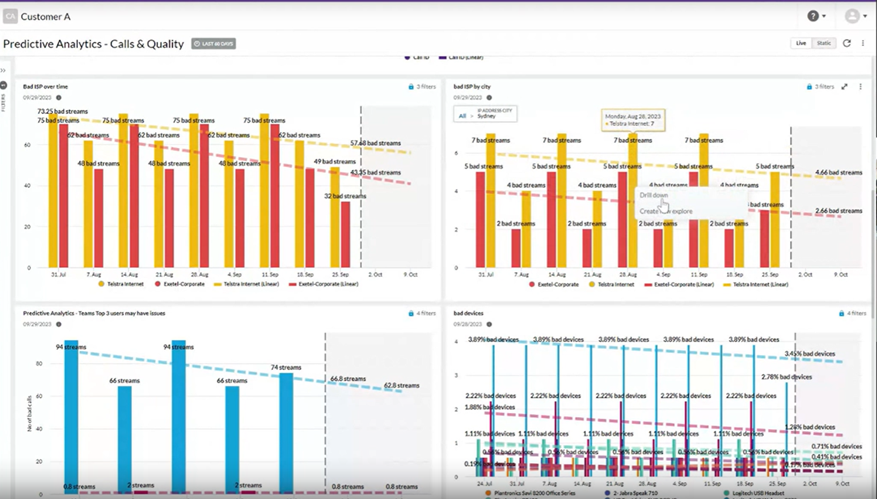
Forecasting call volumes and platform-level adoption trends across every customer, so license and resource allocation is based on where usage is actually heading — not last quarter's numbers. - Catching degraded calls before they escalate
Identifying which portion of forecast call volume is likely to include degraded or failed calls, so the team can act before customers notice. - Spotting recurring failure patterns
Analyzing historical trends to flag where the same class of issue keeps recurring across the environment, so it gets fixed at the root instead of resolved one ticket at a time.
Trend analysis is also how MSPs prove a fix actually worked — not just that a ticket got closed.
IR's Iris layer, built into Prognosis, is already laying the groundwork here — using a unified call data record layer to support pattern recognition and capacity planning today, with deeper trend-based predictions on the roadmap.
How IR Collaborate can help
One platform, every customer, one view.
This is the gap platforms like IR Collaborate are built to close for service providers running UC and contact center environments at scale — already monitoring more than 20 million UC and CC endpoints across 45+ countries for providers managing exactly this kind of multi-tenant environment.
Collaborate consolidates monitoring, troubleshooting, and reporting for every customer into a single platform — replacing the patchwork of per-customer, per-vendor tools with one place to see what's happening and why. For MSPs specifically, that means:
- Per-customer visibility
Monitor every customer and every platform from one console, with clean tenant isolation. - Multi-vendor monitoring
See across Cisco, Microsoft Teams, Avaya, Genesys, and other UC and contact center platforms without a separate tool for each one. - Proactive detection
Identify degrading call and video quality before it reaches a support ticket.
The result is less time spent switching between dashboards, and more time spent on the work that actually differentiates an MSP's service — not the tooling behind it.
The MSPs who come out ahead over the next few years won't be the ones running the most monitoring tools. They'll be the ones who can see their entire stack, for every customer, from one place — and who know what's coming before a customer has to tell them.
See how IR Collaborate supports service providers managing UC and contact center environments at scale. Request a demo.