

eBooks, Guides, & Reports • 16 MIN READ

Transaction Monitoring Software: Complete Guide to Finding Your Solution

IR Team

Written by IR Team

info@ir.com

In today's rapidly evolving payments industry, businesses, Financial Institutions (FIs), merchant acquirers and Managed Service Providers (MSPs) are facing a challenging payments landscape.

To keep up with consumer demands for faster, more seamless transaction processing, the need for increased security and to stay ahead of changing Anti Money Laundering (AML) regulations, transaction monitoring has never been more important.

For all players in the payments industry, a robust transaction monitoring system is absolutely crucial to meet and improve AML compliance requirements and detect fraudulent activity as well as create a more streamlined transaction processing environment.

Simplify your payments by using one tool to monitor and manage transactions across multiple vendor solutions

The transaction monitoring software market: Growth 2024 - 2034

Revenue from the global transaction monitoring market is estimated at US$17.59 billion in 2024. According to research by Fact.MR the market has been projected to expand at a CAGR of 9.4% to reach a value of US$43.2 billion by the end of 2034.

Transaction monitoring market growth

What is transaction monitoring software?

By analyzing transaction patterns, transaction monitoring software helps to protect financial systems by mitigating risk and preventing costly penalties and reputational damage.

What does a transaction monitoring solution do?

The best transaction monitoring software will analyze customer transactions to detect suspicious activity, and identify anomalies and patterns that could indicate potential fraud or other criminal and illegal activities.

An advanced transaction monitoring system like IR Transact uses advanced analytics to collect transaction data that brings real-time visibility to your entire payments environment.

Additionally, real time monitoring software gives financial organizations a clear window through which they can see customer transactions and analyze historical data based on past and predicted future activity.

Real-Time vs. Batch monitoring systems

Real time and batch transaction monitoring are two different ways to analyze financial transactions.

  • Real time monitoring, as the definition suggests, analyzes transactions as they happen. This enables immediate, proactive detection and intervention in the event of any suspicious activity.

  • Batch monitoring processes transactions in sets, or groups, usually at the end of a day or week, This approach enables a deeper analysis of long term trends and patterns.

Both methods provide important insights with the ability to identify abnormal behavior, spot suspicious financial transactions and block high-risk activities, creating a better user payments experience from end-to-end.

Industry use cases for transaction monitoring

  • Banking: Transaction monitoring in real time can detect unauthorized account activity, such as unusual withdrawals or transfers.

  • E-commerce: Monitoring in real time is crucial to identify and block fraudulent payment attempts, for example during high-volume sales events.

  • Telecommunications: Monitoring in real time can flag unusual call routing behaviors or suspicious prepaid account activity.

  • Retail Banking: Batch monitoring daily activity across accounts can identify potential money laundering or fraud.

  • Insurance: Batch monitoring can audit claims transactions to flag inconsistencies or identify suspicious patterns.

  • Government Agencies: Examining cross-institutional financial activities to identify large-scale money laundering operations.

Real-time vs batch monitoring

How does transaction monitoring software work?

AML Transaction Monitoring works to prevent financial crimes including money laundering and terrorism, as well as maintaining the reputation of the bank or financial organization. Transaction monitoring software is set up to follow a workflow which can efficiently detect the irregularities and patterns that might be signs of financial anomalies, money laundering or other crimes.

Transaction monitoring tools like IR Transact follow a common workflow, which involves:

  1. Collecting and inspecting all transaction data

  2. Applying rules or algorithms to identify anomalies

  3. Identifying suspicious activity

  4. Conducting initial reviews and triage of alerts

  5. Performing detailed investigations of suspicious alerts

  6. Filing Suspicious Activity Reports (SAR) to authorities

  7. Taking post-investigation actions to mitigate risks

  8. Continuously reviewing and improving the transaction monitoring process

Transaction monitoring workflow

Machine Learning and AI in Transaction Analysis

Advanced machine learning algorithms and artificial intelligence (AI) have vastly extended transaction monitoring capabilities by automating tasks, improving accuracy and efficiency, and enhancing fraud detection.

ML and AI technologies can analyze vast datasets, and identify patterns, while continuously learning from data to predict and prevent fraud, optimize processes, and improve risk management. Here's how:

  1. Pattern Recognition: AI algorithms can successfully identify complex patterns, detect anomalies and reduce false positives that human detection may miss.

  2. Real-time Analysis: AI enables transaction analysis in real time, providing immediate, pro-active response to potential threats.  

  3. Continuous learning: ML algorithms provide adaptability by continuously learning from new data and evolving fraud tactics.

  4. Automation: AI relieves the burden of repetitive tasks through automation, enabling human analysts to focus on more complex issues. 

  5. Accuracy and Efficiency: AI can significantly reduce errors and improve risk detection and turnaround times, vastly improving the accuracy and efficiency of transaction analysis.

  6. Improved Risk Management: AI helps financial organizations better manage risk by identifying and mitigating potential threats. 

  7. Continuous Regulatory Compliance: AI can monitor changing regulations and compliance demands to fulfill ongoing legal requirements.


False Positives: The Hidden Cost of Poor Transaction Monitoring

While a monitoring tool tends to flag any unusual activity, not every alert is an indicator of suspicious activity, and false positives can generate anomaly detection even in situations that pose no actual risk.

False positive, or unnecessary alerts can be caused by various factors, including overly sensitive monitoring rules, and incomplete or inaccurate data.

These limitations in identifying legitimate transaction patterns can be challenging and costly for organizations.

The impact of False Positives

  • Increased compliance costs: Compliance teams end up spending time and resources investigating non-suspicious transactions. 

  • Reduced operational efficiency: False positives cause unnecessary investigations that can hinder operational processes, resulting in inefficiencies. 

  • Negative impact on customer experience: Legitimate customers can be wrongly flagged as suspicious, resulting in a negative customer experience. 

  • Waste of resources: Investigating false positives can be a huge waste of time and resources, which can potentially divert attention from actual suspicious activity. 

Without the benefit of artificial intelligence and machine learning analytics, suspicious activity scenarios can escalate, making it more difficult to detect legitimately suspicious behavior.

Causes of false positives in transaction monitoring

How to Minimize False Positive Rates

Artificial intelligence is proving to be the key to helping solve the recurring problem of false positives in transaction monitoring.

AML transaction monitoring uses automation to go beyond traditional rule-based approaches, providing several key benefits that enhance the accuracy of monitoring systems.

1. Advanced Pattern Recognition: AI learns from past transaction data, so it can effectively distinguish between legitimate and suspicious activities effectively. Traditional systems may unnecessarily flag transactions just for reaching a preset threshold.

2. Contextual Intelligence: AI and ML-driven transaction monitoring systems can assess the context behind transactions such as customer history, transaction locations, and business relationships. This gives AI the necessary data to assess whether a flagged transaction is genuinely suspicious or simply unusual but legitimate.

3. Automation and Workflow Optimization: AI systems can streamline compliance processes by automating routine tasks, such as generating Suspicious Activity Reports (SARs) and prioritizing alerts. This enhances detection accuracy and optimizes workflows.

4. Real-Time Fraud Detection: Traditional rule-based systems require periodic updates, while AI updates data in real-time, making continuous adjustments based on changing behavioral patterns. This helps compliance teams in a thorough review of suspected fraud payment transactions.


Why Transaction Monitoring is Critical for Financial Institutions

To recognize the indicators of fraud, and other financial criminal activity, every financial organization, merchant, acquirer and payments processor needs deep, comprehensive insights into transactions within their payments system in real time.

IR Transact is a monitoring tool that can not only track suspicious transactions, but can also provide invaluable insights into transactions and trends to help organizations make better business decisions. Here's how:

  1. By using customizable dashboards to see the information most relevant to your payments environment.

  2. By translating complex data sets into simple, easy-to-understand information

  3. By enabling you to add your own rules when setting alerts, to help reduce false positives

  4. By giving you the analytics tools to better understand how your environment is performing


While transaction monitoring software is important for risk management and compliance, it can also improve operational efficiency by analyzing vast amounts of data quickly and accurately. This allows more time and freedom to re-distribute resources more effectively.

Want to find out more about real-time monitoring? Read our comprehensive guide


Key features to look for in a transaction monitoring system

Monitoring software needs to be powerful enough to meet compliance regulations, yet with enough flexibility to be updated regularly.

1. Risk scoring

While the best transaction monitoring tools are designed to identify suspicious transactions, rule management is an important feature at the core of every monitoring tool.

Rule management triggers suspicious activity alerts based on your specific risk management strategy. This allows you to set a risk score to automatically decide whether the transaction is to be accepted, declined, or manually reviewed.

2. Sandbox environment

Risk rules need to be tested using live data as well as historical data, so it's important to have the option to test monitoring software in sandbox mode, to make certain that you can minimize false positives and negatives.

3. Real-time alerts

AML transaction monitoring software must detect suspicious activity and deliver results almost instantaneously. This not only helps with compliance, but alleviates any friction and frustration for legitimate customers.

4. Custom rule management

Compliance regulations and requirements are always changing, so it's vital to have the ability to update your rules as often as you need to without having to rely on developers. Make sure your monitoring software allows you to easily create, edit, and update rules.


IR Transact: Advanced Transaction Monitoring Solution

Navigating the growing complexity and demands of the payments world means that organizations must shift their focus from a reactive problem-solving approach, to proactive resilience-building.

Machine learning and AI is helping to mitigate the threat of financial crime, keeping customers happy, ensuring security and anomaly detection - and keeping up with compliance requirements. All this is simply not possible without the help of a complete solution like IR Transact.

Monitor and analyze payments with IR Transact

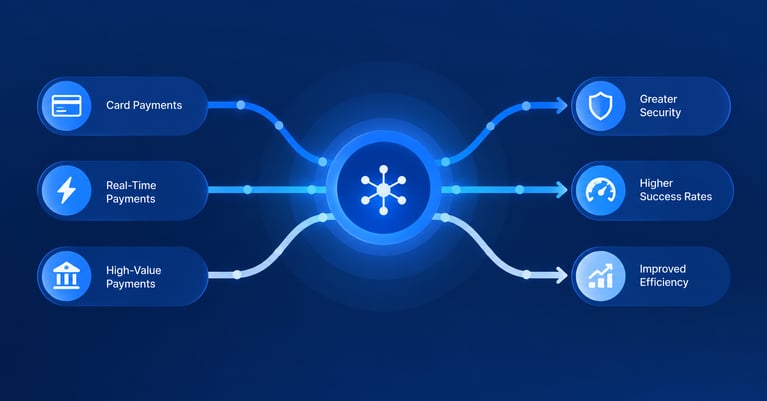
IR Transact addresses common transaction monitoring challenges by providing real-time visibility into payment ecosystems, streamlining operations, and improving customer experience.

Using a proactive, end to end approach, it helps with real time fraud prevention, and manages risk, by ensuring regulatory compliance. Creating a resilient payment infrastructure with the ability for unlimited flexibility is a proactive approach to ensuring seamless operations and sustaining continued growth.

Find out how you can detect and troubleshoot problems in your payment processing environment

Banner to book a demo of IR business system monitoring

IR Transact: Keeping you in business

In a world where downtime costs serious money, it's imperative to have a resilient payment monitoring system to meet compliance regulations, manage risk levels, safeguard against financial crime, and place seamless customer transactions at the forefront of your business priorities.

Turn data into actionable insights

IR Transact offers end-to-end observability throughout your entire payments environments. This capability provides organizations with real-time, actionable insights, allowing them to identify and address issues before they escalate.

Frequently Asked Questions About Transaction Monitoring Software

Q: What is transaction monitoring software?

A: Transaction monitoring software continuously tracks and analyzes customer transactions to identify unusual or potentially suspicious activity. It's a key component of anti money laundering compliance programs and also helps detect fraud and other illicit activities.

Q: Why is transaction monitoring software important?

A: It's vital to help business and financial organizations to:

  • Comply with regulations that require monitoring to prevent fraud and suspicious activity

  • Reduce financial losses by early fraud detection

  • Protect organizations from reputational damage

  • Improve customer experience

Q: What key features should transaction monitoring software have?

A: Features should include:

  • System integration: The ability to seamlessly integrate with existing banking and financial systems. 

  • Monitoring in real time: The ability to monitor transactions as they occur. 

  • Automated analysis: To identify anomalies and suspicious patterns. 

  • Risk scoring: The ability to assign risk scores to transactions or customers based on their activity. 

  • Customizable rules: The ability to tailor monitoring rules to specific business needs and risk profiles. 

  • ML and AI powered capabilities: Using AI and machine learning to improve alert accuracy, block suspicious activity and identify new types of fraud. 

Q: What are the key challenges in implementing transaction monitoring software?

A: Key challenges include:

  • Managing the high volume of transactions

  • Handling false positives and negatives

  • Adapting to evolving fraud techniques

  • Ensuring regulatory compliance

  • Achieving real-time processing

  • Maintaining data quality

  • Creating and customizing an effective transaction monitoring system to serve your organization 

  • Regulatory complexity

  • Data quality due to silos and legacy technology

Q: How can I overcome the challenges in transaction monitoring?

A: To overcome challenges, it's important for organizations to focus on these key aspects:

  • Ensuring that your transaction monitoring software is fully customizable and capable of integrating with existing systems

  • Enhancing data quality through advanced integration technologies (like APIs and middleware)

  • Adopting a risk-based approach that considers customer behavior, transaction profiles, and risk scores

  • Leveraging AI-powered solutions to automate alert triage, spot suspicious patterns, and reduce false positives

  • Regularly reviewing and optimizing transaction monitoring rules to align with regulatory requirements and business needs

  • Comprehensively documenting all transaction monitoring activities, including alerts, investigations, and decisions

IR Book a Demo


Topics: Payments Payment processing Real-time monitoring Transact Transaction analytics

Subscribe to our blog

Stay up to date with the latest
Collaborate, Transact and Infrastructure
industry news and expert insights from IR.