


.png?width=141&height=141&name=Transact%20(1).png)






.svg)

.svg)
.svg)
.svg)


%201.svg)
















New payment processing technology never stops evolving, and it's reshaping how consumers, businesses, and financial institutions handle every transaction.
Payment management solutions have become the backbone of that shift, giving organizations the tools to process payments, monitor payment status, and keep cash flowing without missed payments or manual work.
This guide explains what payment management solutions are, how they work, and what to look for when choosing a payment management process, including how IR Transact adds real-time visibility across your payments ecosystem.
Quick Answer: What Are Payment Management Solutions?Payment management solutions are systems that help organizations send, receive, track, and monitor payments across their processing infrastructure. They encompass multiple payment methods, and combine accounts-payable automation. This includes invoicing, recurring billing, reconciliation with real-time monitoring of payment health, giving business decision makers complete visibility and control over their entire payment ecosystem. |
What are payment management solutions?
Payment management software is the system financial organizations use to process electronic funds transfer, manage the accounts payable process, and keep their entire payment ecosystem running smoothly.
At its core, it combines two things: the accounts payable automation that handles invoice processing, recurring payments, and generating invoices, and the real time monitoring that gives you visibility into payment status, pending payments, and overall transaction health.
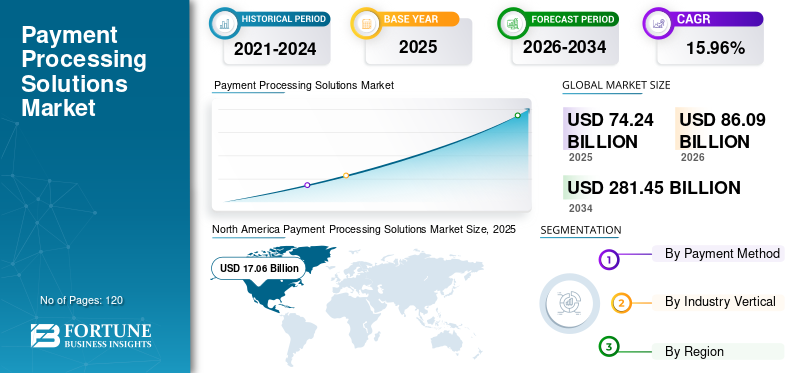
The global payment processing solutions market was valued at USD 74.24 billion in 2025 and is projected to reach USD 86.09 billion in 2026, growing at a compound annual growth rate of 15.96% through 2034, according to Fortune Business Insights.
 That growth reflects how central payment management has become: without proper oversight of payment workflows, businesses risk missed SLAs, late payments, lost revenue, and reputational damage.
Predictive analytics help businesses make better budgeting and marketing decisions. The best payment management software ensures that you get actionable insights into every facet of your online payments stack, giving you detailed intelligence and contextual data throughout each step of your real-time payment engine.
The best payment management software gives decision makers a comprehensive view of every payment type moving through their systems. Bank transfers, digital wallets, card payments, and real-time payments, are all a modern evolution of traditional electronic funds transfer.
Effective payment management reduces operational costs, cuts down on manual input and human error, and improves cash flow by giving finance teams full visibility into outgoing payments and early payment discounts they might otherwise miss.
According to Turing IT labs, payment management software can reduce invoice processing time by 80%. The right payment management system can not only track payments, but reduce operational costs and improve cash flow by allowing you to gain visibility into your entire payment ecosystem.
How does payment management software work?
Payment management software integrates seamlessly with existing accounting systems, and is a critical component of B2B payment solutions. It gives organizations a single system to manage the entire process of processing payments, from generating invoices to reconciling accounts.
-
Integration. Sophisticated software like IR Transact integrates seamlessly with your existing accounting system, billing software, and payment gateway, reducing the manual work needed to reconcile accounts and process payments across multiple payment methods.
-
AP automation and invoice processing. Payables automation software uses AI and automation to streamline invoice processing and generating invoices, cutting the repetitive tasks and manual input that slow down the accounts payable process and lead to late payments.
-
Recurring payments. Payment management solutions automate recurring billing, reducing missed payments and freeing finance teams from manual work.
-
Pending payments and payment status. Payment management software solutions provide real-time visibility into pending payments and payment status, so nothing falls through the cracks.
-
Payment workflows. Payment management systems track and monitor different payment types, helping teams streamline payment workflows and identify trends before they become problems.
-
Fraud detection and payment security. Built-in fraud detection and rigorous authorization controls protect outgoing payments and online transactions, while supporting the regulatory compliance every payment system needs.
Effective payment management software can turn a back-office function into a source of informed decisions, giving finance and operations teams the data they need to manage payments proactively rather than reactively.
How to choose a payment management solution
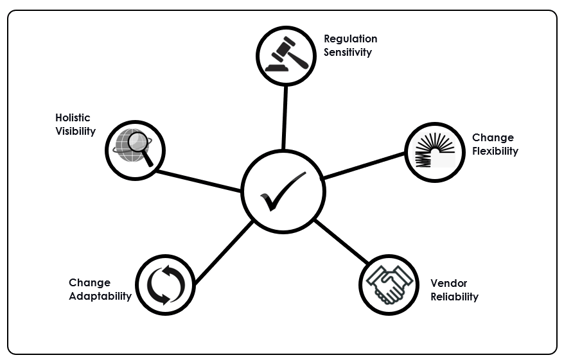
Payments processors, including issuing banks, merchant acquirers, and growing enterprise organizations, need a payment ecosystem that's efficient, resilient, and robust. Consistent payments build trust with customers and vendors, who all expect a seamless experience. Additionally, AP automation tools should scale with a company's cash flow needs. So choosing the right payment management tools means evaluating five key criteria.
1. Holistic Visibility
Real-time visibility across your system is vital throughout the payment process, so you can act the moment problems occur. Look for one tool that gives a single, comprehensive view of every payment type and every component of your payment ecosystem. You don't need a patchwork of dashboards to sort through.
2. Regulation Compliance
Global payment compliance is a complex web of security frameworks, data privacy laws, and financial crime regulations. Regulatory standards such as PCI DSS, GDPR, AML etc. keep changing. The right payment management system should build in encryption and tokenization by default, and stay current with evolving compliance requirements or risk serious penalties and reputational damage.
3. Adaptability
Payment options have evolved from magnetic-stripe cards to EMV chip-and-pin, digital wallets, wearables, and real-time payments. How buyers discover and evaluate payment management software is evolving too, as AI-driven search, and generative answer engines become part of the research process. Cloud-based payment management systems allow access via desktop or mobile devices, and keep pace with new payment types to deliver intelligent insights.
4. Flexibility
Payment management solutions should do more than monitor system health. They should help investigate root causes, forecast trends, and let business users configure new metrics as business needs change, without waiting on a vendor's release cycle.
5. Vendor Reliability
Vendor-specific tools tie you to that vendor for support, updates, and new features. Partnering with a reliable provider that offers 24/7 customer support saves time, money, and the frustration of chasing down issues alone. Additionally, payment management systems should validate vendors to avoid fraudulent invoices.
Want more detail on these criteria?
Read our blog on choosing a payments performance monitoring tool >>
Payment Management vs. Payment Processing
Payment processing is the transaction-execution layer. The systems that authorize, clear, and settle a payment the moment it's made. Payment management sits above that layer, as the ongoing oversight, monitoring, and reconciliation of payment flows across an entire ecosystem, whether that's the accounts payable process, recurring payments, or high-value real-time transfers.
| A payment processor moves the money. | A payment management system tells you whether that money moved correctly, on time, and securely, giving you the visibility to fix it when it didn't. |
Deliver Seamless Experiences with IR Transact
Payment management software is only as good as the visibility it gives you into your own environment.
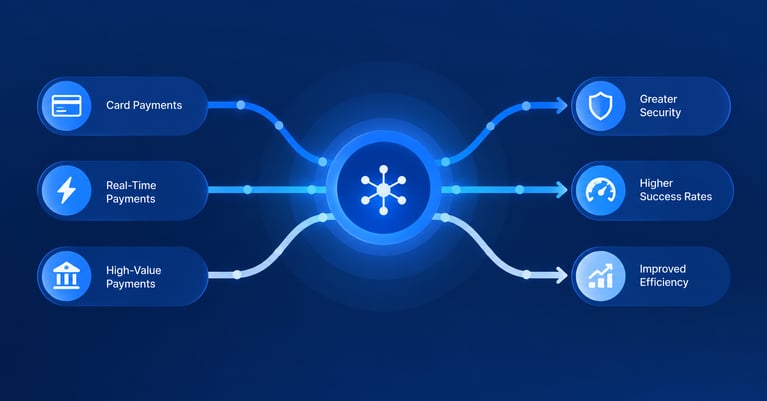
IR Transact is a real-time payment monitoring and analytics platform built for high-volume, business-critical payment environments. Our payment management software solution is used by banks, payment processors, and financial institutions to track transaction health across card, real-time, and high-value payment rails.
Easily Identify and Resolve Issues
Monitor the health of your real-time payments and spot anomalies with an all-encompassing view into queue status, transaction volumes, and bottlenecks, so you can get ahead of disruptive events before they reach the customer.
• Streamline operations and reduce costs
• See real-time visibility of your transactions, regardless of vendor
• Stay in control of your payments ecosystem with dynamic thresholds and alerts
Improve Customer Satisfaction
A seamless real-time payments experience increases customer spending and loyalty by:
• Finding and fixing problems before they impact customers with rapid troubleshooting
• Ensuring successful deployments and optimal performance across all payment types
• Reducing downtime and optimize service levels
Get Complete Visibility
Get a comprehensive view of historical transaction information to investigate and identify the root cause of issues, with dashboards you can customize to show what matters most.
• Use our customizable dashboards to surface the information most important to you
• Translate complex data sets into straightforward, digestible views
• Understand how your environment is performing
Unlock Insights in Your Data
Turn payments data into business insights and uncover opportunities to streamline your business processes. and payment services. Because payment management directly affects cash flow, predictive analytics and reporting help finance teams with financial planning and budgeting, flagging early payment discounts, forecasting outgoing payments, and reducing the cost of late payments before they hit the balance sheet.
See more on real-time transaction monitoring >>
or
Read about tracking, monitoring, and managing your real-time payments >>
What Our Customers Say
|
"I recommend Prognosis for the ease of installation and the ease of configuration. I trained an operator in just two days on how to create new custom screens for our monitoring department. Prognosis is very simple to operate." |
Find out how a global bank transformed High-Value Payments Monitoring with IR >>
Frequently Asked Questions
Q: What is payment management software and how does it work?
Payment management software helps organizations send, receive, track, and monitor payments across their entire payment ecosystem.
It integrates with your accounting systems, billing processes, and payment gateways, automating recurring payments and invoice processing. It gives real-time visibility into payment status, so businesses can process payments accurately and catch problems before they escalate.
Q: How does AP automation reduce invoice processing time?
By removing manual input from generating invoices, matching payment terms, and approving outgoing payments.
Automated systems can cut processing time significantly compared with manual work, reducing late payments and freeing finance teams from repetitive tasks.
Q: How do payment management systems ensure security and compliance?
Through through encryption, tokenization, and adherence to standards like PCI DSS and other regulatory standards.
Built-in fraud detection and authorization controls monitor transactions for suspicious activity, reducing human error, and helping companies meet regulatory compliance requirements as they evolve.
Q: How does payment management software improve cash flow?
Payment management software improves operational efficiency and cash flow by giving finance teams complete visibility into outgoing and pending payments.
Predictive analytics support financial planning and budgeting, while automated systems help capture early payment discounts and avoid the cost of missed or late payments.
Q: What should I look for in the best payment management software?
Look for holistic visibility across payment types, strong regulatory compliance and security, and adaptability to new payment methods.
It should also provide flexibility to configure metrics as business needs change, and a vendor with a reliable track record of support and updates.
Q: What's the difference between payment management and payment processing?
Payment processing is the transaction-execution layer that authorizes and settles a payment.
Payment management is the broader oversight layer, monitoring, tracking, and reconciling payments across the accounts payable process and real time payment rails.
Q: Can payment management software integrate with existing accounting systems?
Yes. Payment management solutions are built to integrate seamlessly with existing accounting systems, billing software, and payment gateways, so businesses can send and accept payments across multiple payment methods without duplicating manual work.
Q: Why does real-time payment monitoring matter for enterprise organizations?
Enterprise organizations process mass batches of payments across multiple channels, and any disruption can affect SLAs, revenue, and reputation.
Real-time payment monitoring identifies issues as they happen, giving teams the data to act before customers are affected, providing real cost savings.
Get a Demo
Ready to see complete visibility across your payment ecosystem?
Get a demo of IR Transact and find out how real-time payment management can reduce risk, cut costs, and keep every transaction on track.

Related Resources