


.png?width=141&height=141&name=Transact%20(1).png)






.svg)

.svg)
.svg)
.svg)


%201.svg)















High-value payments (HVPs) – otherwise known as wholesale payments – are the backbone of global commerce. In the financial world, HVPs move liquidity, settle trades and FX, and underpin wholesale market confidence.
As HVP volumes and values continue to grow, so too does the complexity of the technology that drives them. Banks are realizing that they need to do more than secure transactions; they need complete visibility into the entire payment lifecycle. This means complete transparency, real time control and actionable intelligence.
Monitoring and observability are strategic imperatives for driving trust and efficiency in high value payments.
Find out more about key technology priorities for wholesale banking in 2026 and beyond.
Read the whitepaper.
The current landscape: scale, speed, pressure
The global payments ecosystem handles trillions of transactions and quadrillions of dollars in value annually, underlining both scale and size of the prize for both incumbents and challengers.
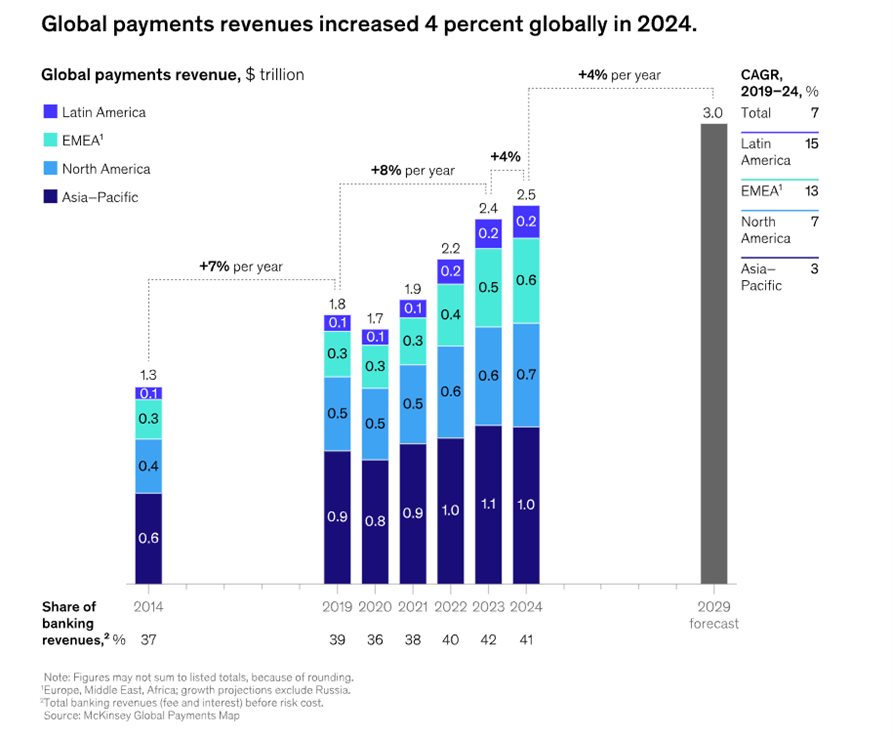
According to Reuters, at national and regional level, large-value Real-Time Gross Settlement (RTGS) systems, and connected CHAPS/RTGS rails, continue to handle the lion’s share of high-value settlement by value.
For example, CHAPS/RTGS volumes in sterling routinely measure in the hundreds of billions daily and account for the overwhelming majority of sterling flow by value - a reminder that high-value rails are mission-critical and settlement-centric.
ISO 20022: The data opportunity (and the operational challenge)
The global shift to ISO 20022 is more than a messaging system swap - it’s a transformation of the way payments data is being used to increase efficiency and reduce payments complexity.
ISO 20022 delivers richer, structured, standardized fields that improve reconciliation, compliance automation, pre-validation and straight-through processing.
Broad adoption underpins better exception handling, reduced manual intervention, and clearer audit trails - precisely the inputs needed for higher trust and faster resolution across high-value flows.
That said, ISO20022 migration and adoption is globally uneven, and the coexistence period has added complexity.
Richer data improves capability but increases the need for systems that can handle the complexity and act on larger, more intricate message sets in real time.
Why traditional monitoring alone is no longer enough
Traditional payment monitoring alerts, rule-based checks, and batch reconciliations are still relevant, but they’re insufficient in modern HVP environments. Reasons include:
Operational resilience & SLAs
Missing cut-offs, settlement delays, or queue build-ups can generate regulatory exposure and lost counterparty trust. Monitoring that only detects incidents after they occur can leave the bank firefighting rather than preventing cascade effects.
Complex, cross-stack dependencies
High-value payments traverse networks, middleware, messaging hubs, banks’ core ledgers and correspondent banks. Surface alerts don’t explain root causes or cross-domain impacts.
Speed and predictability
Clients demand predictability for large transactions (timing, status), so institutions must reduce mean-time-to-detect (MTTD) and mean-time-to-resolve (MTTR) - something basic monitoring struggles to deliver at scale.
Customer expectations
Most banks and financial institutions citing customer experience as their number one priority. Customer expectations are rising, with zero tolerance for failure or latency.
Traditional monitoring tools simply aren’t built to handle the level of complexity and volume that defines high value payments. Institutions need more than just visibility - they need intelligent observability and proactive control and the tool that can provide this is IR Transact.
What is IR Transact?
IR Transact is a complete payments observability tool, built for complex, high volume payments environments.
IR’s high value payments solution ingests queue and transaction telemetry, validates message health, visualises end-to-end flows and produces actionable alerts and analytics in real time.
Our advanced payment monitoring and observability solutions deliver:
- Operational confidence: real-time visibility into queues, settlement windows and interbank flows that lets operations teams remediate before SLAs break.
- Faster incident resolution: automatically correlating events across systems significantly reduces MTTR and customer impact. Industry observability reports show financial firms reduce detection/resolution times when observability is mature.
- Better ISO 20022 outcomes: the ability to validate rich message fields, flag incomplete or non-standard usage, and trace how data quality impacts downstream processing.
- Liquidity and capacity planning: predictive view of queue growth and settlement patterns supports intraday liquidity optimization and fewer intraday credit events.
- Regulatory and audit readiness: consistent, searchable records of message flows, exceptions and corrective actions simplify reporting and reduce compliance overhead.
Unlike generic monitoring platforms, Transact is purpose-built for payments. It correlates and contextualizes payments data with infrastructure and application metrics - giving financial institutions a true 360-degree view of their payment environments.
Let’s drill down further and find out exactly how IR Transact can deliver what it promises.
Key Value Drivers of IR Transact for High-Value Payments
1. End-to-End Visibility Across Payment Lifecycles
Transact tracks payments from initiation to settlement—across systems, servers, and services. This helps institutions identify bottlenecks, delays, or failures in real time. Whether it's a delayed SWIFT message or a failed middleware component, Transact pinpoints issues fast.
Key Benefit: Reduces MTTR (Mean Time to Resolution), avoiding SLA breaches, and keeping mission-critical payments flowing.
2. Proactive Issue Detection with Intelligent Alerts
Transact doesn't just show you what’s happening, it tells you what’s likely to happen. With configurable thresholds and AI-driven anomaly detection, it proactively alerts teams to performance degradations or risks before they impact transactions.
Key Benefit: Avoiding reputational damage and financial losses due to failed or delayed high-value transactions.
3. Real-Time and Historical Analytics
Understanding past performance is key to optimizing future operations. Transact allows institutions to drill into historical data, trace root causes of payment failures, and improve operational strategy.
Key Benefit: Supporting compliance, audit readiness, and strategic decision-making with detailed transaction analytics.
4. Custom Dashboards and Reporting
Transact allows tailored dashboards for different roles, from IT Ops to payments teams to compliance officers. This role-based access improves communication, reduces response times, and aligns all teams around a shared operational picture.
Key Benefit: Breaking down operational silos and fostering collaboration across business and technology teams.
5. Support for ISO 20022 and Multi-Rail Payments
With financial institutions migrating to ISO 20022 and supporting multiple payment rails (SWIFT, SEPA, RTGS, etc.), Transact offers unified monitoring across formats and systems.
Key Benefit: Future-proofing your monitoring system as payments evolve toward richer, more structured data and faster settlements.
What Makes IR Transact Different?
While many monitoring tools can offer infrastructure insights or application metrics, IR Transact uniquely bridges the gap between payments and performance. Its domain-specific intelligence, real-time transaction tracking, and ability to correlate across complex environments make it stand out.
Key differentiators include:
- Deep integration with financial services systems
- Specialized support for high-value and high-risk transactions
- Proven scalability in Tier 1 banks and financial institutions
- Decades of IR’s expertise in critical system monitoring
The Bottom Line
As high-value payments become more digital, dynamic, and demanding, financial institutions must evolve beyond traditional monitoring.
IR Transact empowers organizations with the real-time observability, control, and intelligence they need to keep their most critical transactions secure and seamless.
Whether you're a payments operations leader, IT manager, or compliance officer, Transact delivers the visibility and assurance that today’s financial ecosystem demands.
Ready to take control of your high-value payments?
Book a demo and discover how IR Transact can help you.

.png?width=767&height=450&name=high-value-payments-monitoring-tile%20(1).png)
.png?width=767&height=450&name=rtgs-high-value-payments-settlement-tile%20(1).png)