


.png?width=141&height=141&name=Transact%20(1).png)






.svg)

.svg)
.svg)
.svg)


%201.svg)

















For hundreds of millions of people, the workday now runs through one app window. Microsoft Teams handles the meetings, the group chat, the file sharing, and the project channels — and the last figure Microsoft disclosed put monthly active users at 320 million as of October 2023, making Teams the busiest hub inside Microsoft 365.
That scale creates a problem of its own: most people use a fraction of what Teams can actually do. Microsoft ships new capabilities into the platform every month, and the features that quietly save the most time rarely come with fanfare. This guide rounds up the Microsoft Teams tips worth knowing in 2026, grouped by what they actually help you do: stay organized, work faster, and keep meetings human.
Top features of Microsoft Teams
Four capabilities that explain why Teams became the default hub.
- Collaboration on any device:
Teams works the same way on desktop, mobile, and in-browser, and integrates directly with meeting room hardware — so a conversation started on a phone picks up exactly where it left off on a laptop. - One-to-one or in a small group:
Private chat, a quick huddle, or a full team conversation, all in the same client, without switching apps. - Online meetings:
HD video, VoIP, and dial-in audio conferencing, scheduled and joined from the same place you chat. - A dedicated phone number:
Calling features are built into the Teams client itself, so voice doesn’t need a separate system bolted on the side.
The tips below go further than the feature list. They’re the shortcuts and settings that make Teams faster to use once you’re already living in it.

Microsoft Teams tips for staying organized
As teams and channels multiply, organization is what keeps information findable.
New users and new channels pile up fast, and the volume of information shared inside Teams can bury important conversations in a tangled list of chats. The tips below help keep things findable, so time isn’t lost hunting for a file or a thread instead of doing the work.
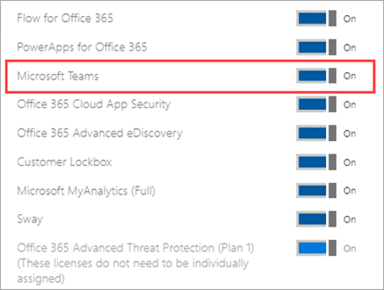
Decide who gets Teams admin privileges
By default, every user in a Microsoft 365 tenant can create and modify teams — though this depends on your organization’s own policy. The more people who hold administrative rights, the harder it becomes to keep a consistent naming, permissions, and lifecycle standard across the tenant. Assign this deliberately rather than leaving it at the default.
Use channels to keep conversations on topic
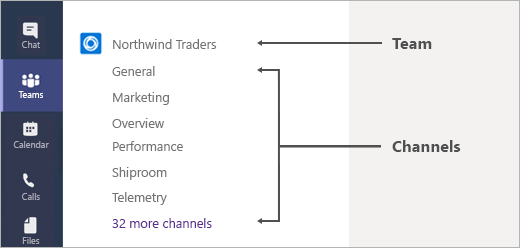
Teams uses channels to organize conversations by subject, so a group can run a dedicated channel per project or workstream. That keeps discussions and files tied to the right context instead of scattered across one general chat.
Mark your most-used channels as favorites
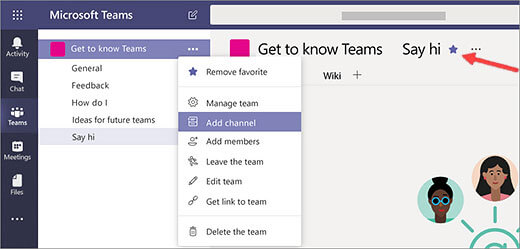
If there are specific teams and channels you open every day, pin them to the top of your list. Click the three dots next to the team or channel name and select Favorite.
Reorder teams with drag and drop
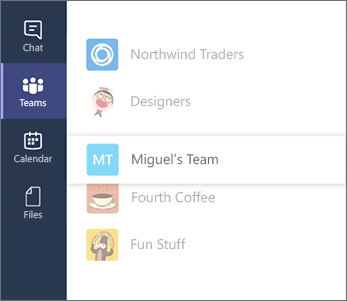
Favoriting a team moves it into its own category at the top of the pane, but you can also control where the rest of your teams sit on the list below it. Click and drag a team in the direction you want; when the list highlights gray, drop it into place.
Group people into tags
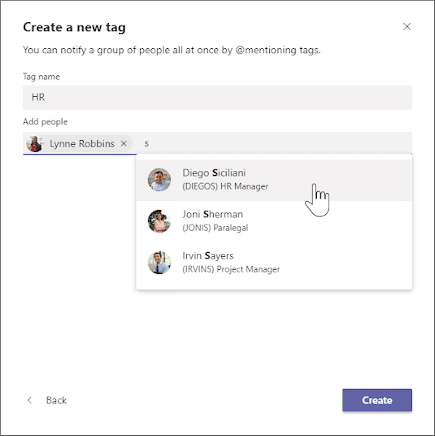
Tags let you build subgroups inside a team based on role, project, or location, so you can @mention or message everyone under a tag in one move instead of adding people one at a time. Add and manage tags from your Teams settings.
Microsoft Teams tips for productivity
Small setting changes that cut the friction out of a normal day.
Customize your notifications
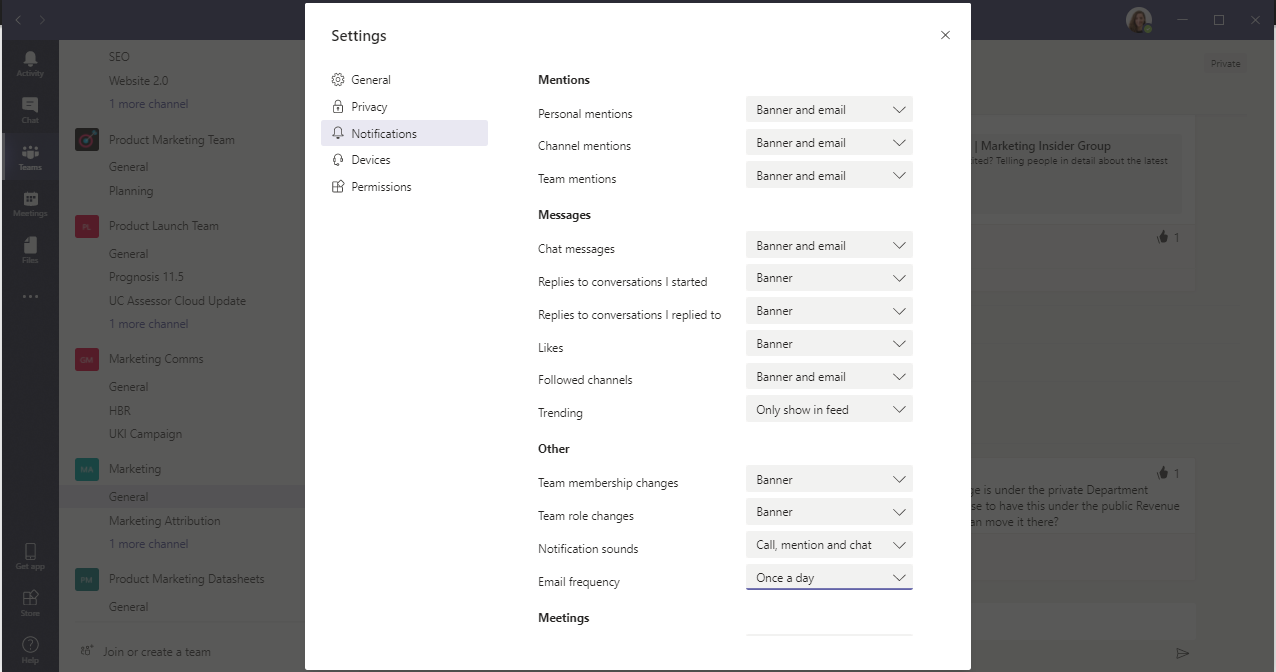
Belonging to a lot of active channels means a lot of noise if every comment triggers an alert. Click your profile picture in the top right corner, open Notifications, and set the alert type and frequency that fits how you actually work.
Bring your other tools into Teams
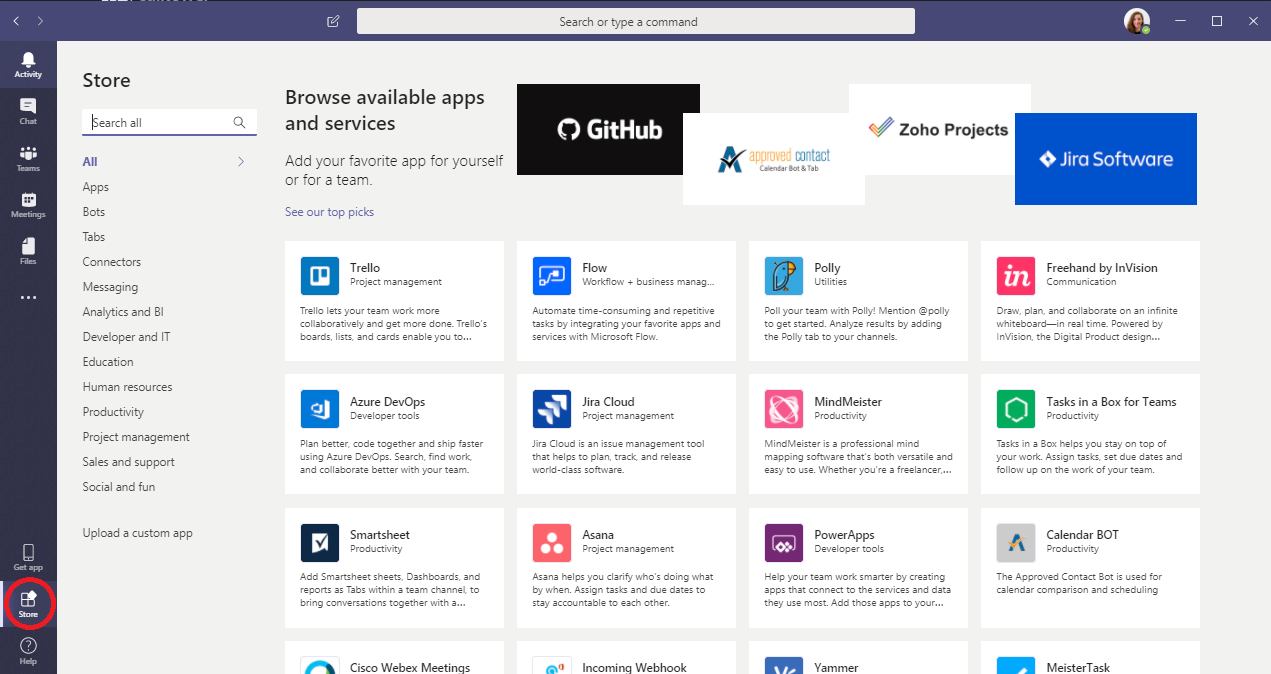
Every workplace runs a different mix of apps, and Teams is built to sit alongside them rather than replace them. The app store, accessible from the left-hand navigation rail, holds a growing library of integrations, and Microsoft adds new APIs regularly to widen what's possible. For organizations routing phone calls through Teams specifically, our guide to Microsoft Teams Direct Routing covers calling plans versus direct routing in detail.
Save time with slash commands
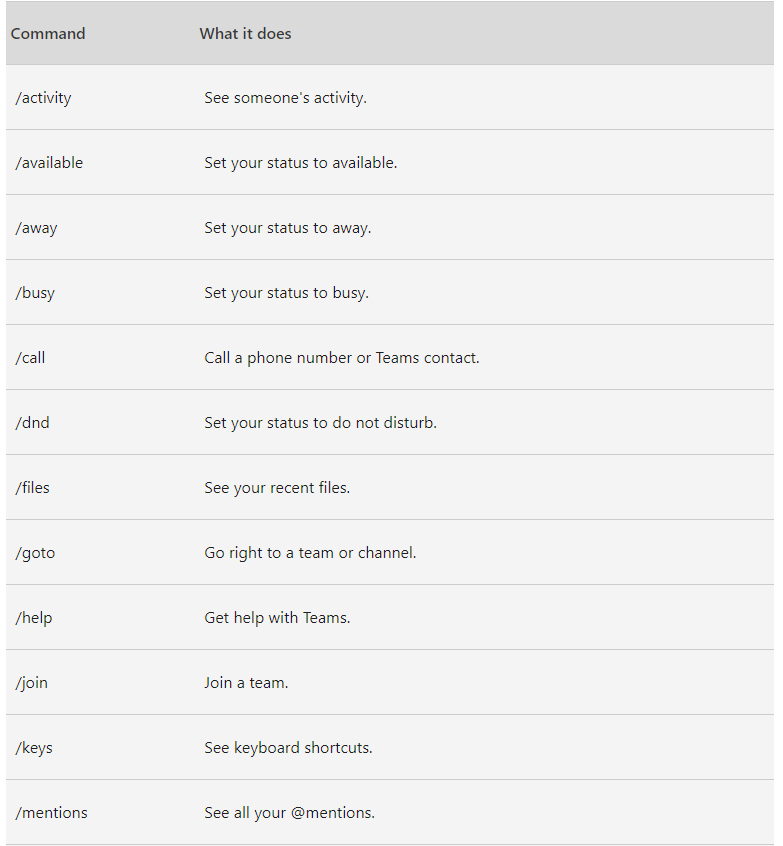
The search bar at the top of Teams — the command box — doubles as a shortcut launcher. Type / to see the full list; a few worth building into muscle memory:
- /goto:
Jump straight to a specific team or channel without scrolling to find it. - /files:
Find, view, and edit any file shared with you across Teams, without remembering which channel it lives in. - /mentions:
See every place you’ve been @mentioned, so nothing gets missed. - /busy:
Set your status to Busy in one keystroke, no menu required. - /schedulemessage:
Queue a message to send later, useful across time zones. - /help:
A direct shortcut to the Teams help center if something isn’t working.
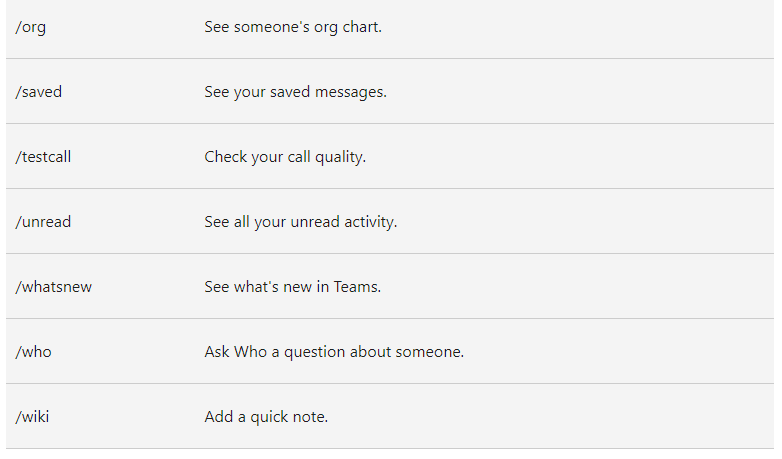
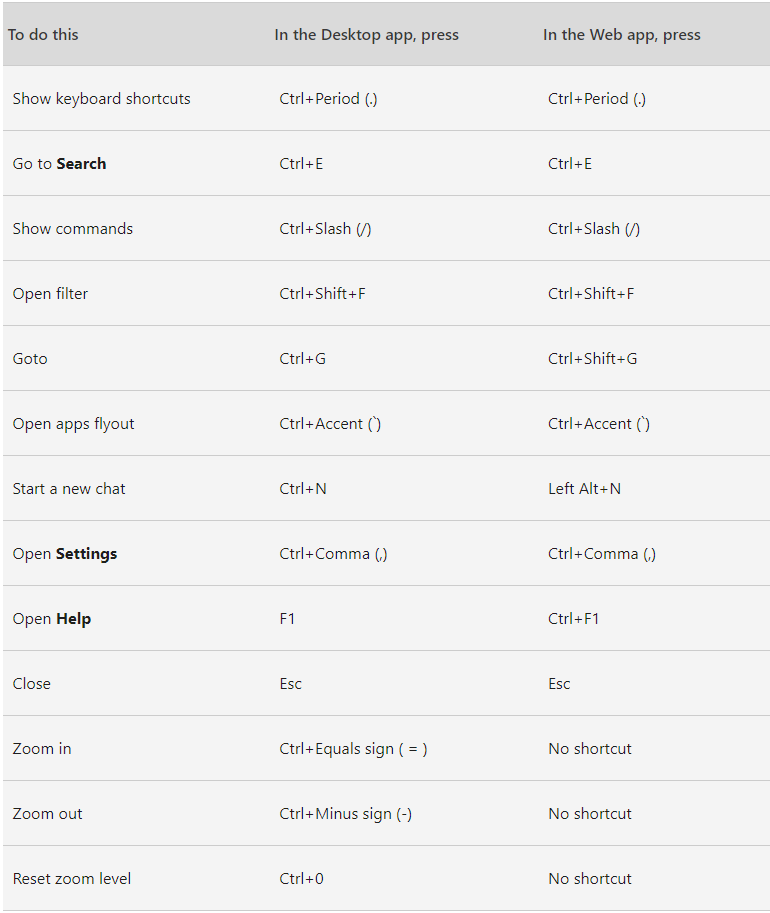
Microsoft updates the command library often, so it’s worth checking the menu periodically for what's new. Some of the shortcuts currently in circulation are summarized below.
Let Teams break down language barriers
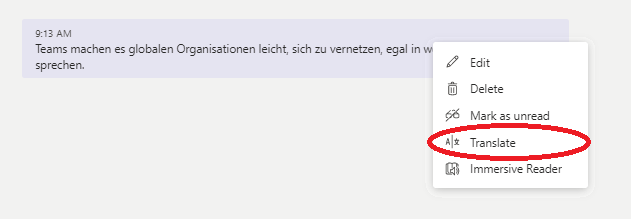
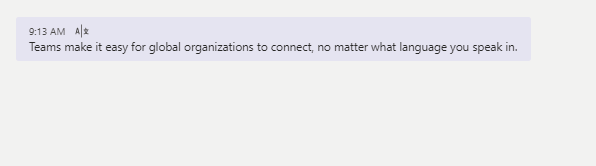
For organizations working across countries and languages, Teams can translate a message into your default language with one click. Select the ellipses on any message and choose Translate. So this…
…becomes this:
Use Do Not Disturb to protect focus time
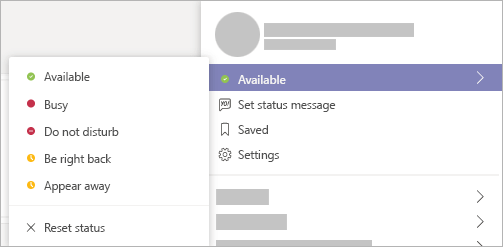
Constant pings from incoming messages can wreck a focus block. Click your profile icon and set your status to Do Not Disturb to silence non-urgent notifications. If there are people you never want to miss, even while notifications are paused, grant them priority access in your privacy settings.
Use @mention to reach people without breaking flow
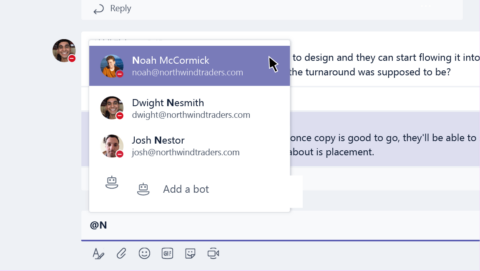
Type the @ sign directly into the search bar to find someone and send a message from wherever you are in the app — no need to leave what you’re doing to find their conversation first. @mentions also filter your Activity feed: open the filter button and choose @mentions to see only the messages that need your attention.
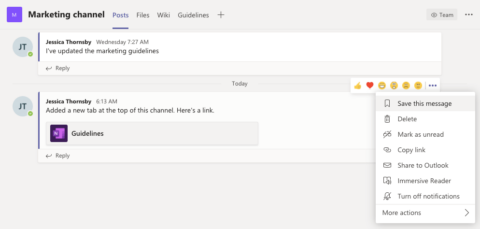
Mark messages as unread so nothing slips through
When a message arrives that you can’t deal with right away, mark it as unread by clicking the three dots next to it, in a conversation or in the Activity feed, so it stays visible until you come back to it.
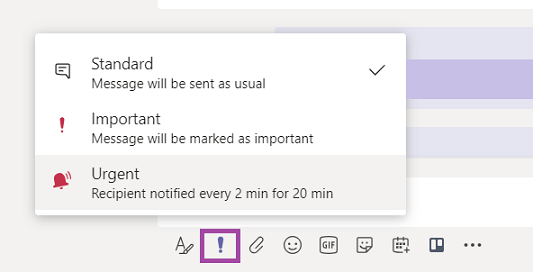
Mark a message as urgent when it can’t wait
To make sure a specific message gets seen, click the exclamation point below the message box before sending. The recipient gets a notification every two minutes for 20 minutes, or until they read it — useful for genuinely time-sensitive requests, and worth reserving for exactly that.
Learn the keyboard shortcuts
An external keyboard and a handful of shortcuts go a long way for anyone living in Teams all day. Microsoft expanded the shortcuts dialog in 2026 so shortcuts are searchable by name as well as by key combination — useful when you know what you want to do but not the exact keys.
Microsoft Teams tips for engagement
Features that keep meetings human, not just productive.
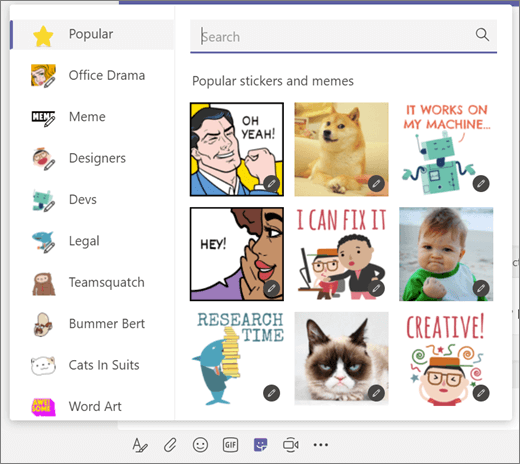
Send stickers and GIFs
A picture carries what words sometimes can’t. Select either option from below the message box to add one to a conversation.
Run a quick poll instead of typing out a question
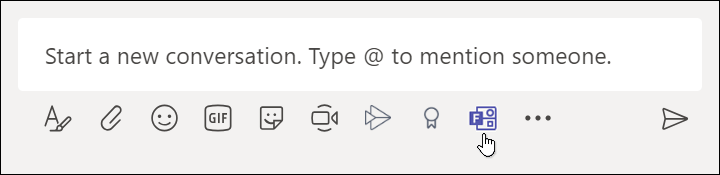
Rather than typing a question into a channel and hoping people reply, click the Forms icon below the message box to build and send a poll, and get a cleaner read on where the group actually stands.
Use Gallery view for large meetings
Microsoft is retiring Together Mode — the shared-background meeting view some Teams users will remember — in 2026, with Gallery view becoming the primary layout for bringing everyone into one shared view. For meetings with a lot of participants, Gallery view now scales further than it used to, so it's worth revisiting your default layout if Together Mode was your habit.
Blur your background when the setting isn’t ideal
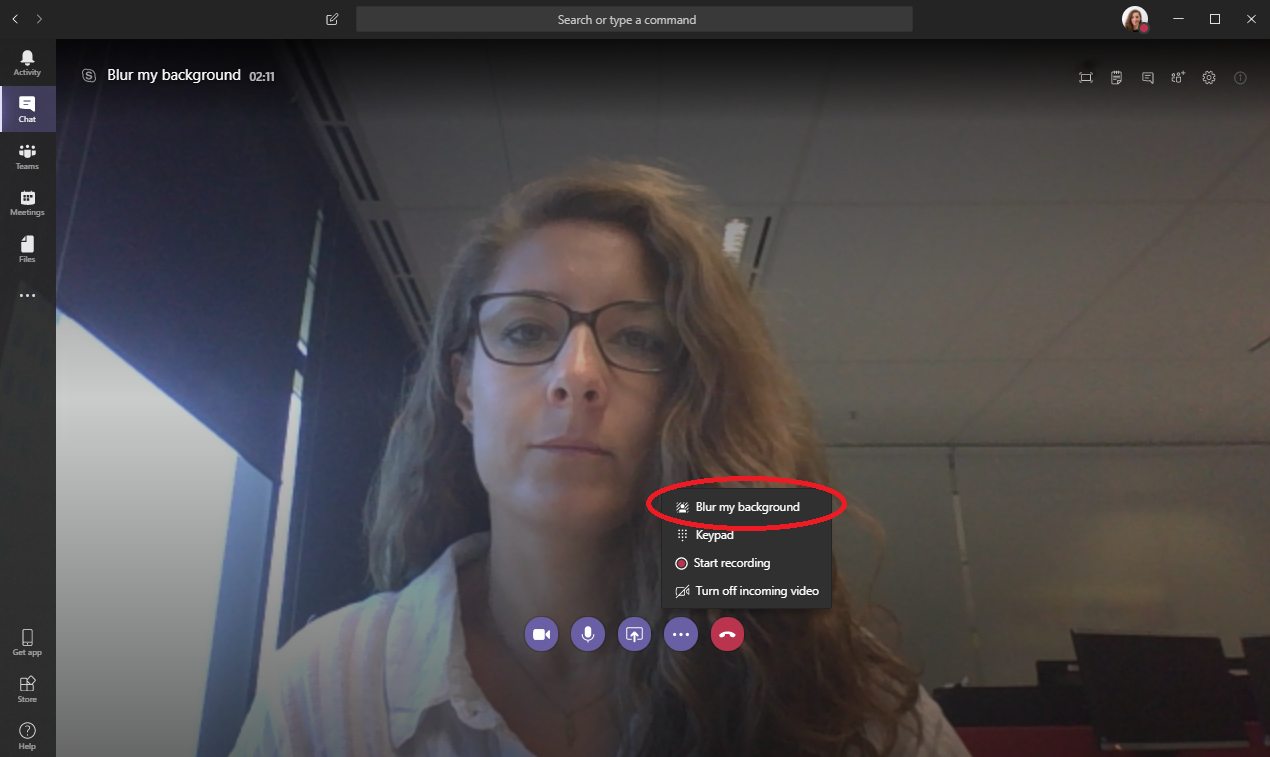
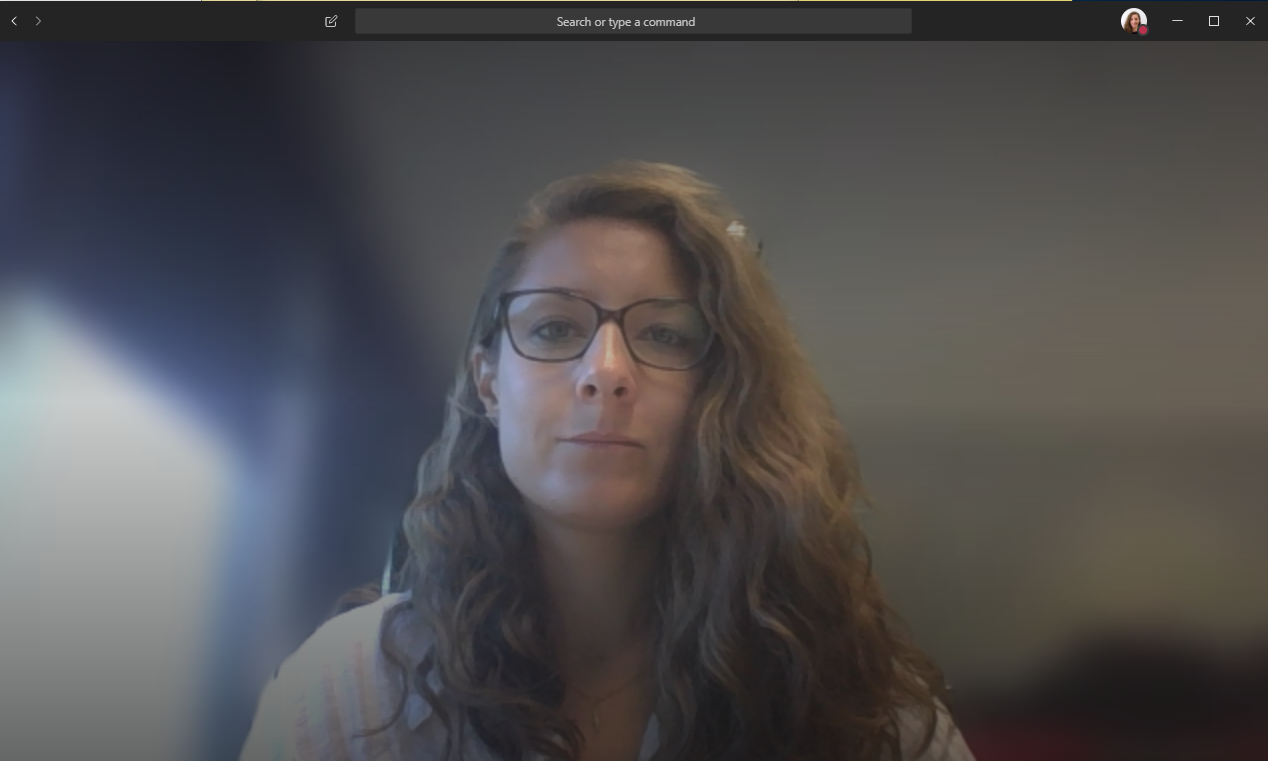
Everyone has taken a call somewhere less than ideal — a home office mid-renovation, or an open-plan desk with people walking behind you. Background Blur keeps the focus on you instead of what’s behind you. Select the ellipses from the call control panel and choose Blur my background:
And the background disappears:
Join a meeting as an avatar
Teams avatars let you join a meeting as a 3D character instead of your camera feed, with expressions and gestures that track your voice and movement. It's a genuinely useful option for a quick call on a day the camera isn't an option. Open the dropdown next to the camera icon, select Effects and settings, and choose Avatars to set one up.
The best Teams tip isn’t hidden in a menu. It’s knowing a dropped call or a frozen screen gets caught before someone has to ask why it happened.
How IR Collaborate helps you get the most from Microsoft Teams
Tips make Teams easier to use. Visibility makes it reliable at scale.
Microsoft Teams earns its popularity partly through how openly it works with the rest of the collaboration ecosystem — existing videoconferencing hardware, third-party apps, and other platforms your organization already runs. That openness is a strength, but it also means more moving parts between a dropped call and a root cause. As adoption grows inside an organization, so does the case for watching the whole environment, not just the Teams client itself.
IR’s Collaborate suite, which added support for Microsoft Teams as part of the Prognosis platform, gives IT teams:
- Real-time performance insights:
See call and meeting quality issues as they happen, not after someone files a ticket. - Deep data analytics:
Correlate performance data across the UC environment instead of reading it one dashboard at a time. - Complete UCC visibility:
A single view across Teams and the rest of a multi-vendor communications environment. - Flexible deployment:
Available as a cloud service or for on-premises deployment, to fit however an organization already runs its infrastructure. - Proactive alerting:
Get flagged to a developing issue before it reaches end users, rather than finding out from them.
All of it is powered by the Prognosis platform, so the same visibility extends across whatever else sits in the communications and collaboration environment alongside Teams — not just the parts Microsoft can see.
For a closer look at what to monitor and why, see our guide to Microsoft Teams tools and monitoring, or explore IR Collaborate directly.
Teams tips save individual minutes. Knowing your Teams environment is being watched is what protects the hours everyone else spends in it.
Rolling out Microsoft Teams, or scaling an existing deployment? Browse IR’s on-demand webinars for more on planning a successful deployment.