





















Payments ecosystems don’t actually have a data problem. Every transaction, authorization, and decline already produces enough data to answer almost any question a payments team has. What’s missing is translation — turning that volume into an answer someone can act on before a customer feels the impact.
Why more data doesn’t automatically mean better decisions
Data-driven decisions need the right three questions, not more dashboards.
For today’s payments organizations, data-driven and data-informed decision-making is critical. But data is only useful once it’s been explored, questioned, and understood. Getting from data to insight takes three things:
- A full view of the data:
Explore payments data from every angle — by channel, processor, region, and time window — not just from one fixed dashboard. - Visibility into where transactions stall:
Identify congestion points, how often they occur, and whether they form a recurring pattern. - An answer to why, not just what:
Pinpoint the specific cause behind a decline or a slow authorization, rather than just knowing one happened.
Once a team understands what’s happening and why, deciding what to do about it stops being a guess.
Data isn’t the hard part. Turning it into an answer someone can act on is.
Want more on simplifying payment complexity? Watch the webinar on demand.
The same data, asked differently by different teams
IT Ops and product teams read the same payments data for two different outcomes.
Everyone across a payments business wants the same broad outcomes: more revenue, lower costs, more customers, and a better customer experience. But “better customer experience” means something different depending on who’s asking.
For IT Ops, it means minimal to no downtime and outages — issues caught and resolved before a customer notices. For a payments product manager, it more often means giving customers the tools to help themselves: a self-service analytics tool merchants can use directly to answer their own questions and manage their own payments performance.
From monitoring to meaning
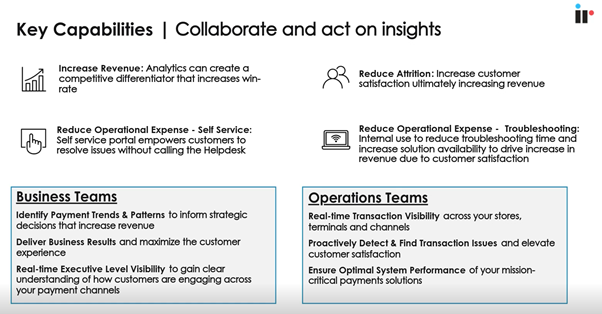
Monitoring generates the data. Analytics decides who gets to use it, and how.
Turning raw monitoring data into a usable insight is what actually changes a decision. Payments providers are focused on getting that insight to the people who need it — IT Ops, merchant help desks, product teams, finance — because the right insight in the wrong hands doesn’t help anyone.
Not everyone in an enterprise is an analytics specialist. A monitoring and analytics tool only earns its place if someone outside the IT Ops team can use it without specialist training.
Where those insights actually get used
Most payments providers are analyzing their data for the same three outcomes.
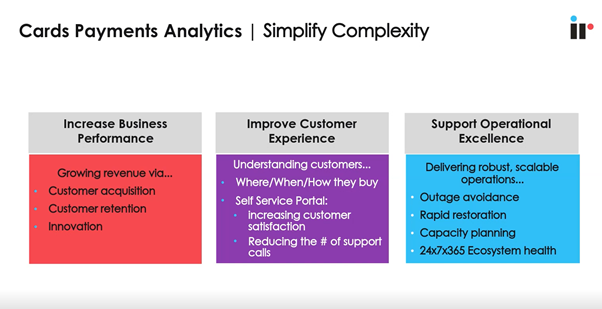
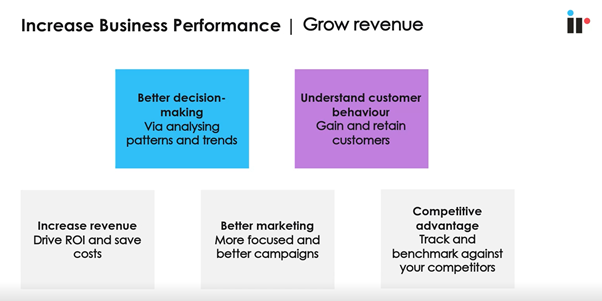
Payments environments are inherently complex — an expanding set of systems and channels, and help desks managing high transaction volumes. Providers are turning to their data for three reasons:
- Growing the business:
Using patterns in the data to find where revenue is being left on the table. - Improving the customer experience:
Catching and explaining the moments where a customer’s transaction doesn’t go smoothly. - Supporting operational excellence:
Giving operations teams the visibility to act before an issue becomes customer-facing.
Banks and merchants generate huge volumes of data, but not every team has easy access to it. Closing that access gap is exactly what a monitoring and analytics solution needs to do.
Business teams want visibility into commercial metrics — sales, cost, win and retention rates. They want to know what happens at the point of purchase: decline volumes, wait times on a terminal response, or a shift toward a particular payment method at the point of sale.
Operational teams want to understand performance well enough to act before an issue reaches the customer. And when an issue does happen, they want to look back at similar past cases to find the systemic root cause, not just the individual incident.
Turning insight into a product, not just a report
For some payments providers, analytics itself has become the product.
Looking back at what’s already happened lets a business forecast what’s coming. A merchant working through a seasonal shift in foot traffic, for example, can use historical in-store versus online volume splits to plan stock and inventory decisions with more confidence.
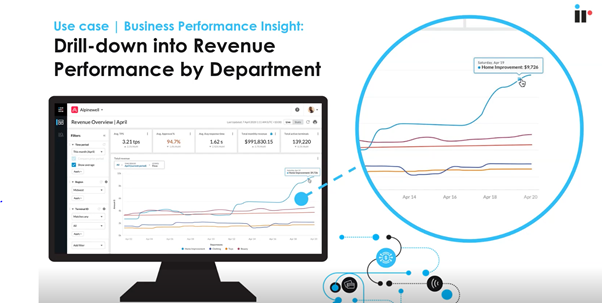
Some payments businesses — merchant acquirers, in particular — are going a step further and offering analytics itself as a value-added service. Giving merchants the ability to self-explore their own payments data, rather than requesting a report, becomes a service differentiator that helps acquirers win and grow merchant relationships over time. Below is an example of the kind of dashboard a merchant would typically want to see.
Most businesses don’t have people watching a screen 24/7 — and shouldn’t need to. A monitoring and analytics tool that generates an alert the moment something deviates from normal gives an incident response team the one thing that matters most: enough lead time to act.
How IR Transact helps
Real-time visibility, not a report after the fact.
The thread running through all of this is the same: insight is only useful if it reaches the right person before the customer feels the problem. IR Transact gives payments teams real-time visibility across complex, high-volume environments, so issues can be identified and understood as they happen, rather than surfacing later in a support queue.
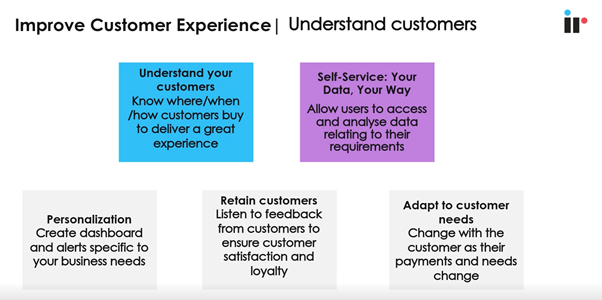
That visibility can extend to merchants and customers too. Acquirers and processors can give merchants secure, self-service access to their own payments data — a proven way to deepen a merchant relationship, not just service it.
With transaction volumes climbing and new payment methods arriving faster than most teams can document them, the businesses that win are the ones that can explain their data, not just collect it — starting with turning transaction analytics into a growth strategy and closing specific customer experience gaps, not adding another dashboard.
The complexity in payments isn’t going away — it’s compounding, with new channels, new payment methods, and higher volumes every year. The advantage doesn’t go to the business with the most data. It goes to the one that can turn that data into an answer, fast enough for it to still matter.
See how IR Transact turns payments data into a decision your team can act on.