















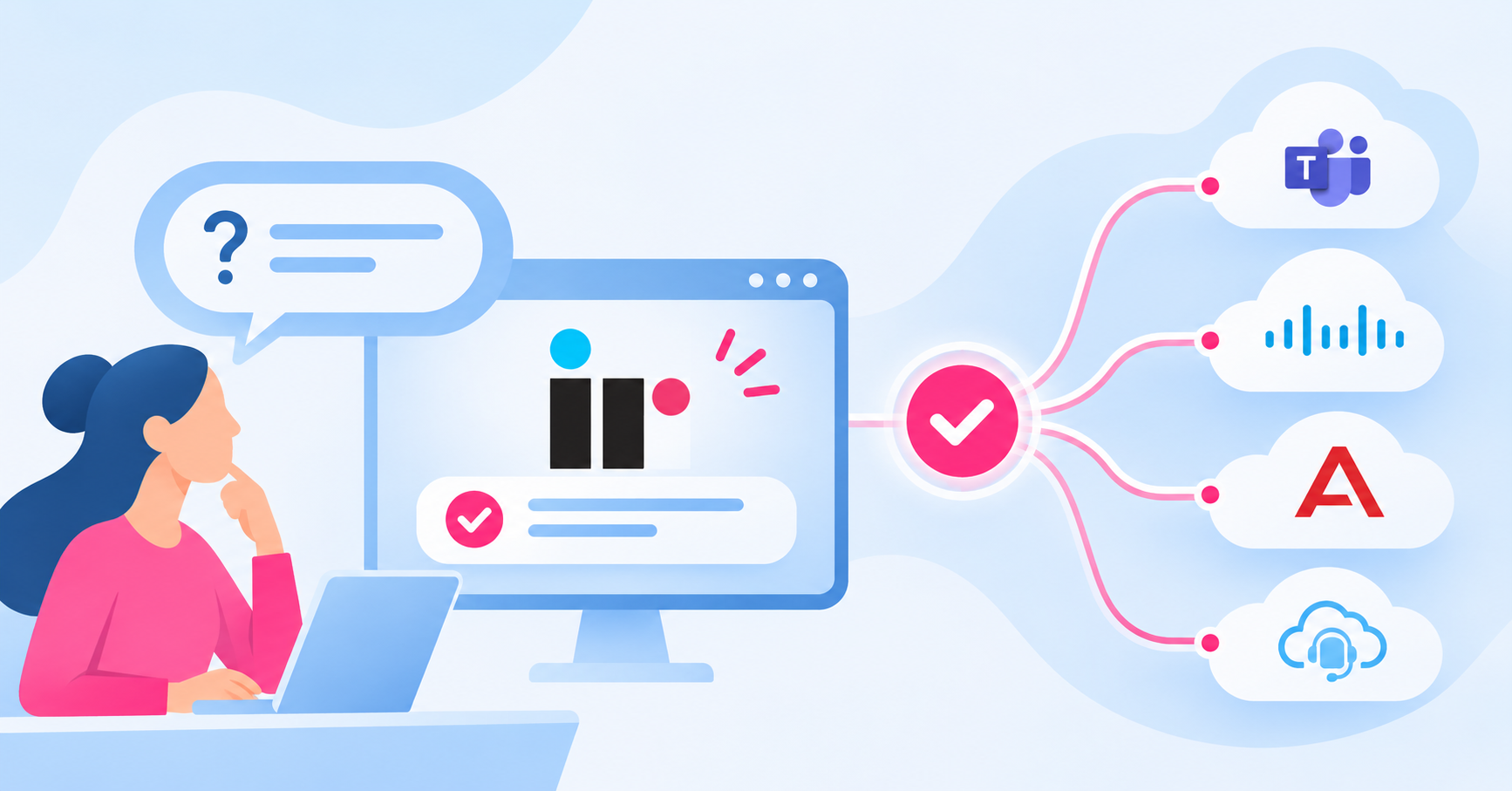
Ask a question. Get an answer. That's the whole interaction model behind Iris — IR's natural-language AI layer, built directly into Collaborate and powered by the Prognosis platform underneath it. Instead of opening five dashboards to find out why calls are failing in one region, you type the question in plain English and get the answer in seconds.
Most observability tools still require you to know where to look before you can find anything. Iris removes that requirement. It translates the depth of Prognosis telemetry into direct, cross-platform answers — so the person asking the question doesn't need to be the one specialist on the team who knows every dashboard by heart.
What Iris Actually Does
Iris is a natural-language AI built directly into Collaborate. Ask a question in plain English and get cross-platform insight across UC, UCaaS, CCaaS, and SBC environments — no custom query syntax, no dashboard-hopping.
That looks like asking things such as:
• "Why are dropped calls spiking in Singapore?"
• "Which platform had the most incidents this quarter?"
• "Show me every failed call between Region X and SBC Y in the last 30 minutes."
• "Find all interactions with long handle times for Queue Z last week."
Iris doesn't just return a chart. It translates Prognosis telemetry into a clear answer and a next step — the difference between "here's a graph" and "here's what's actually happening, and what to check next."
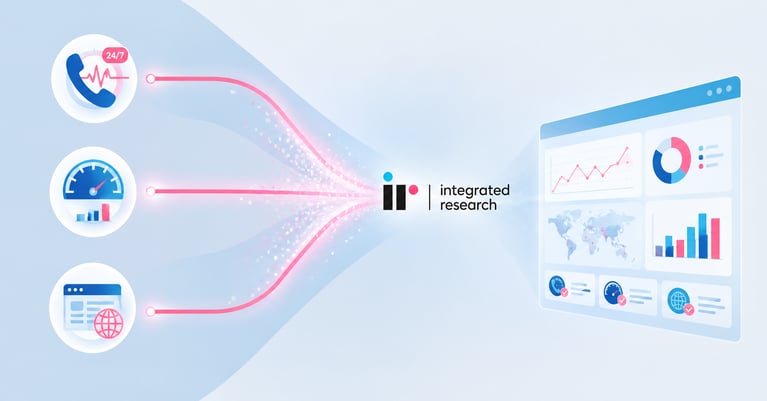
Underneath the conversation, Iris is drawing on the same ecosystem intelligence Prognosis has always correlated — metrics, logs, and call detail records across every monitored platform. What changes is the interface: instead of a dashboard built for a specialist, you get an answer built for whoever's asking.
Why a conversational layer built for UC&C is different
By 2026, a natural-language assistant became close to standard across observability platforms — ask-your-data-a-question is no longer a novel idea. Most of those assistants are built for cloud infrastructure and application performance monitoring, where the underlying environment is relatively homogeneous.
UC&C environments are a different problem. A single enterprise might run Cisco, Microsoft Teams, Avaya, and NiCE CXone side by side, with call quality issues that are time-sensitive and depend on correlating signals across SBCs, carriers, and endpoints. A generic AI assistant built for cloud metrics doesn't carry that context. Iris does — it's purpose-built for multi-vendor UC&C complexity, including contact center environments, not adapted from a general-purpose observability copilot.
That's a meaningful distinction for a UC Manager or IT Operations lead comparing options: a natural-language interface is only as useful as the telemetry model underneath it. Ask a generic cloud AI assistant about a degraded call and it has nowhere to look. Ask Iris, and it's already correlating the SBC, the carrier leg, and the endpoint.
What's new: Unified CDR Search
Release 13.3 introduces Unified CDR Search as a new Iris module — one place to search, filter, correlate, and analyze call detail records across UC, UCaaS, CCaaS, and SBC environments, instead of jumping between dashboards or stitching together data from separate tools.
That matters for three reasons:
-
Faster triage. Teams can surface the right calls immediately, without working across multiple tools to piece together what happened.
-
Compliance-ready history. Historical searches stay practical even as data volumes grow.
-
A foundation for what's next. Unified CDR Search sets the groundwork for trend-based analysis, predictive insights, and proactive capacity planning in future releases.
How IR Collaborate can help
Iris is one part of how Collaborate turns multi-vendor UC&C complexity into something any team member can understand, not just the one engineer who memorized every dashboard. In practice, that means three things for teams running Collaborate today:
Insight isn't gatekept. Iris removes the barrier between people and data, so IT, operations, and leadership can each ask their own questions and get a direct answer.
Resolution moves faster. Iris pinpoints root cause across platforms, so teams can act before an issue escalates and before users feel it.
The environment gets easier to stay ahead of. The unified telemetry layer behind Iris is the foundation for the proactive, predictive capability IR is building toward next.
If you're already evaluating how AI fits into your observability strategy more broadly, our guide on how AI is transforming observability covers the wider shift Iris is part of.
IR is already building on this same foundation. Clarion — a workforce-visibility capability powered by Iris, coming soon — extends the same AI layer from network and platform diagnostics to the end-user experience itself, so IT and operations can see how a problem is actually affecting the people doing the work, not just the systems underneath them.
Frequently Asked Questions
Conclusion
Every observability platform can now claim its data talks back. The real question is whether the assistant actually understands the environment it's reading — and for multi-vendor UC&C, that's a different, harder problem than reading cloud metrics.
That's the gap Iris was built to close, and Unified CDR Search is the first sign of where it's headed next.