


.png?width=141&height=141&name=Transact%20(1).png)






.svg)

.svg)
.svg)
.svg)


%201.svg)















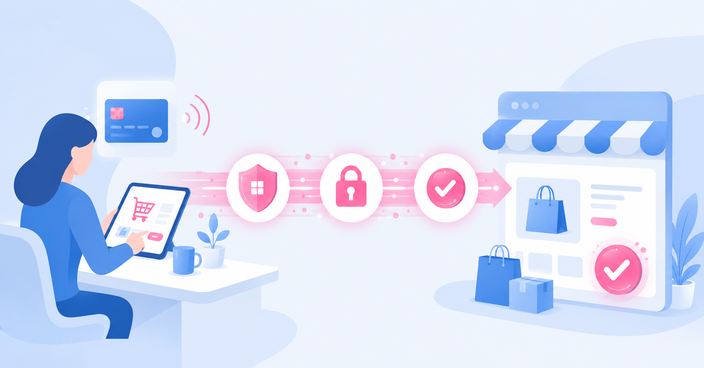

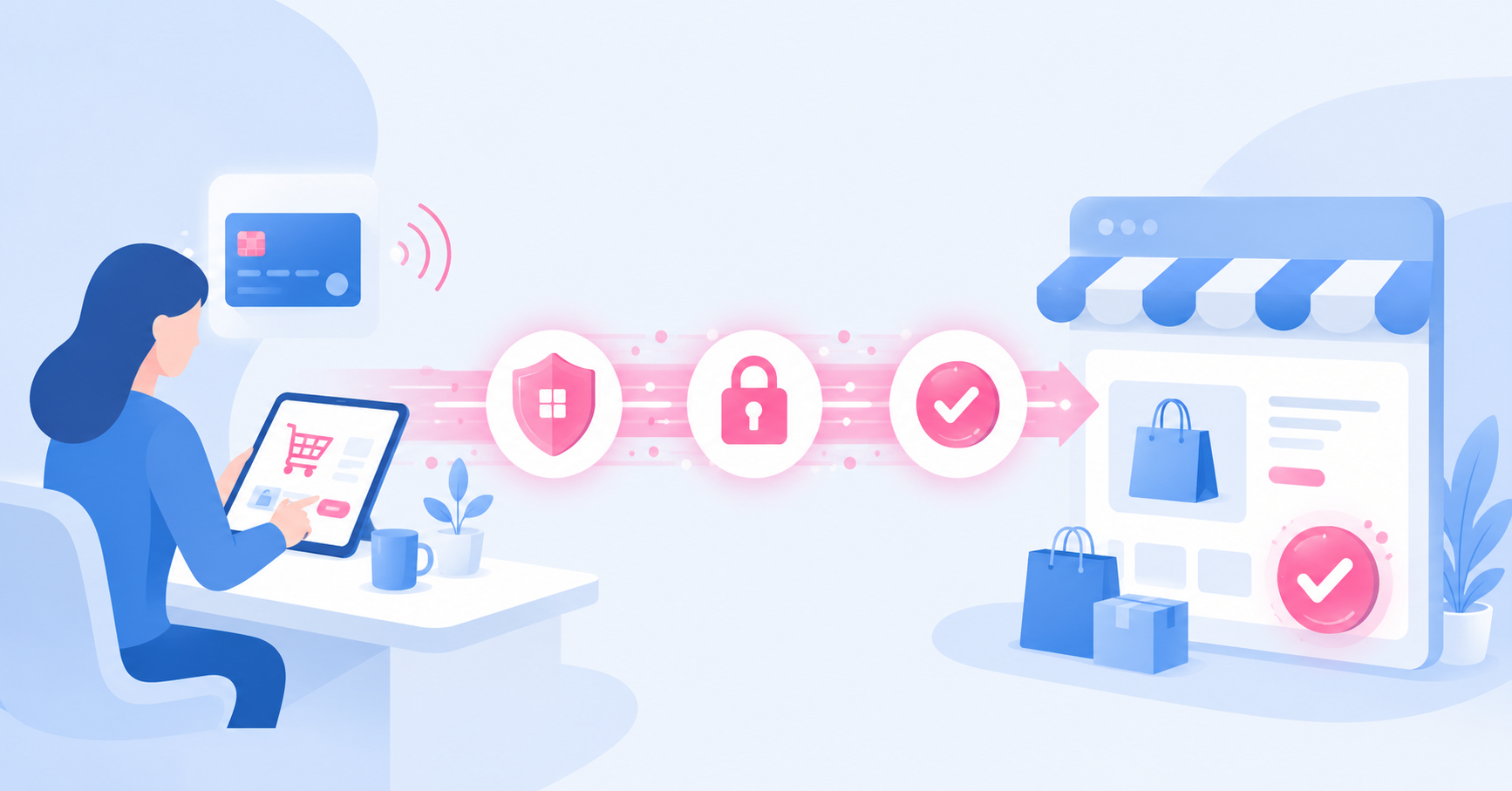
Secure digital payments are transactions in which sensitive payment data — a card number, an account number, or a wallet credential — is protected from exposure at every stage, typically through tokenization, encryption, and PCI DSS-aligned controls, while the transaction itself completes reliably enough to be trusted by both the customer and the regulator.
That second half of the definition is the part most evaluations skip. A payments team can lock down every credential in the estate and still get blindsided by a transaction that authorizes, then silently times out, then gets disputed six weeks later with no record of what actually happened. Security and reliability usually get scored on separate checklists. They shouldn’t be.
Key takeaways
This guide explains what actually counts as a digital payment, what “secure” requires, why a fully secure payment can still fail silently, how payments observability differs from traditional payments monitoring, the six criteria to use when evaluating any digital payment solution, and the most common mistakes that send evaluations back to RFP within a year.
What counts as a digital payment
“Digital payment” gets used as a catch-all, but the four categories that matter for an evaluation behave differently under load and fail in different ways.
-
Card-not-present transactions cover online and in-app purchases where the card is authorized without being physically present. They carry the highest exposure to fraud and false declines because there is no chip or PIN step to confirm the cardholder.
-
Digital wallets and card-on-file payments include Apple Pay, Google Pay, and stored-card checkout flows, where a device or wallet token stands in for the underlying card. Security depends on the strength of that tokenization, not on anything the customer does at checkout.
-
Real-time payments include instant, irrevocable transfers such as PIX, SEPA Instant, and FedNow, where there is no settlement window to recover from a failure after the fact.
-
High-value payments include SWIFT, CHAPS, Fedwire, and similar rails, where a single failed or delayed settlement carries outsized financial and regulatory consequences.
The digital payment market is projected to grow from USD 164.8 billion in 2026 to USD 682.8 billion by 2033. Every category above needs to be secure, but not every category needs the same evaluation criteria. A wallet-fraud problem and a high-value settlement delay call for different controls, and treating them identically is one of the more common evaluation mistakes.
What “secure” actually means
Tokenization does the heavy lifting, but it is not the whole stack.
Tokenization replaces a sensitive payment credential, most often a card’s primary account number, with a randomly generated token that has no exploitable value outside the specific transaction, device, or merchant it was issued for. If a token is intercepted, it cannot be reused to reconstruct the original card number.
Tokenization can also reduce PCI DSS compliance scope because cardholder data never touches a merchant’s systems in its original form, so less of the environment falls under audit.
A genuinely secure digital payment stack typically also includes encryption in transit and at rest, EMV 3-D Secure for card-not-present authentication, role-based access controls and multi-factor authentication for anyone touching the payment environment, and PCI DSS alignment verified against the current standard from the PCI Security Standards Council.
The gap most evaluations miss
A secure transaction that fails silently is still a liability.
Failed payments cost the global economy hundreds of billions of dollars each year. None of that is a tokenization problem. It is a visibility problem.
A fully tokenized transaction that times out mid-authorization is still a failed transaction, and if nobody can see it happen, it is also an unauditable one.
Security and reliability often get evaluated by different teams, on different timelines, against different criteria. But from the customer’s side, and the regulator’s, a payment that is secure but does not complete, or completes but leaves no record, fails the same test as one that was never secure at all.
Payments observability vs payments monitoring
This is the distinction most evaluation guides skip entirely, and it matters most once the security basics are in place.
Traditional payments monitoring answers infrastructure questions such as whether the gateway is up, whether the API is responding, or whether the database is available.
Payments observability answers transaction questions such as whether a specific payment is progressing through authorization, clearing, and settlement as expected, and if not, exactly where and why it stalled.
A system can report excellent uptime while a specific payment method, region, or BIN range is quietly failing underneath it. That is the scenario purpose-built transaction monitoring software is designed to catch, and generic infrastructure monitoring cannot.
How to evaluate a secure digital payment solution
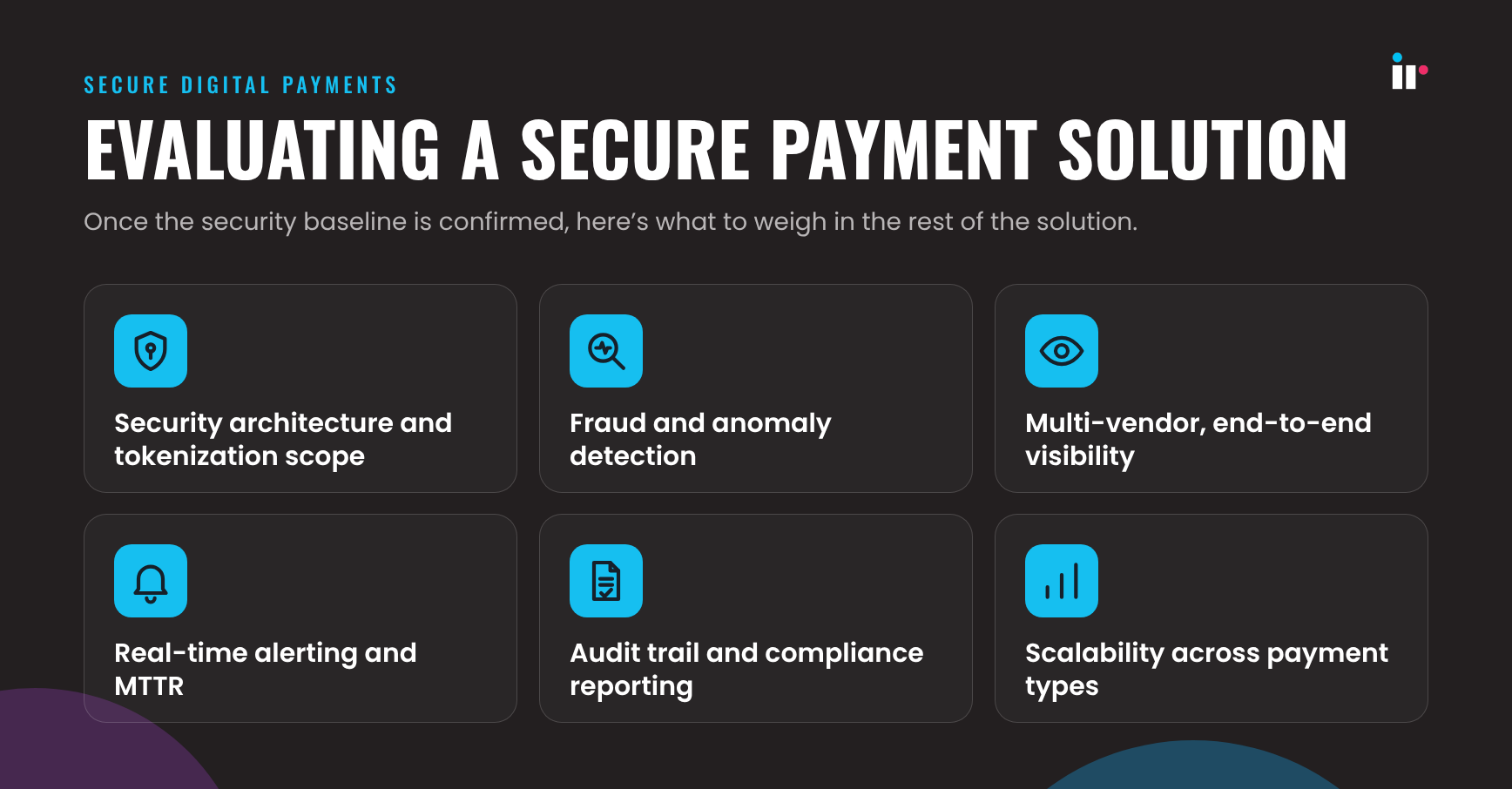
Once the security baseline is confirmed, evaluate the rest of the solution against what it actually shows you in production.
-
Security architecture and tokenization scope. Determine whether the solution measurably reduces PCI DSS scope by keeping raw cardholder data out of your environment in a way you can verify, not just accept as a marketing claim.
-
Fraud and anomaly detection. Determine whether it distinguishes fraudulent activity from unusual but legitimate behavior and reduces false declines alongside fraud losses.
-
Multi-vendor, end-to-end visibility. Determine whether it can trace a transaction across gateways, processors, and networks you do not directly control, or only within its own product boundary.
-
Real-time alerting and MTTR. Determine how quickly it surfaces a degrading payment method, region, or BIN range, and how much of the resolution is automated versus manual.
-
Audit trail and compliance reporting. Determine whether it produces the transaction-level logs a regulator or scheme auditor will ask for on demand, without a separate reporting project.
-
Scalability across payment types. Determine whether one platform covers card, real-time, and high-value payments, or whether each category needs a different tool with a different blind spot.
Common mistakes in digital payment security evaluations
A few patterns account for most evaluations that need to be redone within a year of signing.
One common mistake is treating security and reliability as one line item. A vendor’s security questionnaire response does not tell you whether the platform detects a stalled transaction.
Another is testing under normal load rather than peak load, when tokenization and fraud rules can behave very differently and the cost of a miss is highest.
A third is accepting an uptime SLA as a reliability proxy. Infrastructure uptime and transaction success are different metrics. A platform can meet its uptime SLA every month while individual payment methods or corridors quietly underperform.
Finally, many teams skip the audit-trail test. Ask a vendor to produce, live, the exact report a scheme auditor or regulator would request for a specific transaction.
Where IR Transact fits
IR does not process payments, tokenize cards, or replace the PCI DSS controls covered above. What IR Transact does is sit above that ecosystem and answer the question those tools were not built to answer: is this transaction, right now, behaving the way it should?
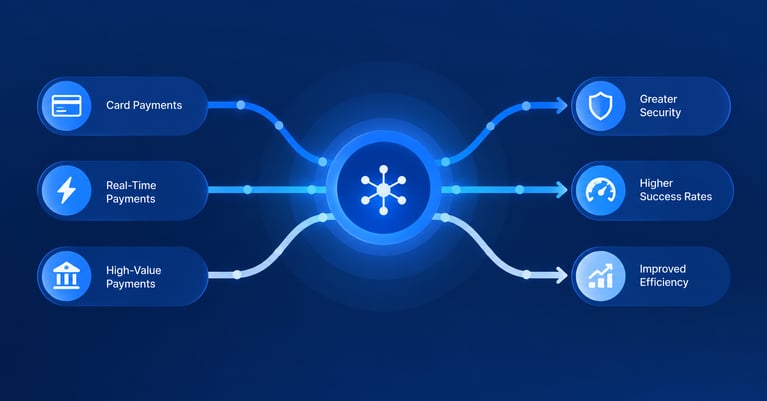
Across card payments, high-value payments, and real-time payments, IR Transact correlates transaction data in real time so payments teams can see a soft decline, a routing failure, or a settlement delay as it develops, not in a postmortem. Iris, the AI layer built into the Prognosis platform, surfaces likely root cause automatically, cutting the time between “something’s wrong” and “here’s why.”
That gives teams end-to-end transaction tracing across the gateways, processors, and networks in their environment, threshold alerting and audit-ready logging, and one platform across payment types so card, high-value, and real-time payments can be evaluated for reliability the same way instead of through separate tools with separate blind spots.
Frequently asked questions
Conclusion
Most digital payment evaluations end at the security checklist: tokenization confirmed, PCI DSS scope reduced, encryption verified. That is necessary. It was never sufficient.
The organizations getting this right are asking a second question alongside it: when something goes wrong inside a transaction that is already secured, will you see it before the customer, or the regulator, does?
That is not a tokenization question. It is an observability question, and it is the one worth adding to the evaluation before the contract is signed.