


.png?width=141&height=141&name=Transact%20(1).png)






.svg)

.svg)
.svg)
.svg)


%201.svg)

















What is POS monitoring software?
Point of Sale (POS) monitoring software solutions track, analyze, and manage traditional POS systems, devices, and transactions in real time across a multitude of locations.
This software is designed to provide visibility into POS terminals, payment processing performance, and transaction flows across multiple locations. This helps businesses detect issues early, improve uptime, strengthen security, and ensure seamless customer payment experiences.
Unlike basic POS management tools, advanced platforms provide deep visibility into payment flows so organizations can identify transaction failures, latency issues, and system bottlenecks.
For enterprise environments, POS monitoring extends beyond hardware into full payment observability, connecting in-store transactions to backend payment systems. This allows businesses to reduce downtime, prevent lost revenue, and deliver seamless customer experiences while maintaining compliance with standards like PCI DSS.
POS monitoring software vs POS management software: Key differences
These two categories are frequently confused, but they serve fundamentally different functions. Understanding the distinction is critical when evaluating solutions for your organization.
Device management vs transaction monitoring
POS management software, offered by platforms like Scalefusion, Square, Esper, and TeamViewer, focuses on controlling and configuring POS devices.
It covers remote access to individual terminals, enforcing security policies, inventory management, pushing software updates, managing mobile devices in the field, and maintaining compliance at the hardware level. If a POS device goes offline, a management platform alerts your IT team.
POS transaction monitoring, by contrast, goes several layers deeper.
It tracks every transaction flowing through your POS system: authorization rates, response times, failure patterns, payment gateway health, and downstream settlement performance. For enterprise organizations, this distinction is significant. Knowing a POS terminal is online isn't the same as knowing whether the payments flowing through it are completing successfully.
|
Feature |
POS Monitoring Software |
POS Management Software |
|
Primary Focus |
Transaction health & payment flows |
Device configuration & control |
|
Data Depth |
Deep analytics, latency, failure rates |
Hardware status, app versions |
|
Target User |
Enterprise, banks, payment teams |
IT ops, retail chains, MDM teams |
|
Alerting |
Transaction failures, performance anomalies |
Device offline, policy violations |
|
Integration |
Payment gateways, processors, networks |
MDM platforms, device registries |
|
Best For |
Payment observability & uptime SLAs |
Fleet-level device management |
"Reporting and analytics are non-negotiable. You need access to detailed reports on sales trends, best-selling products, customer demographics, and employee performance," bills.com.au.
SMB tools vs enterprise observability platforms
Popular POS software solutions including Loyverse, Square POS, and similar platforms, are purpose-built for small businesses and single-location hospitality or retail environments. They offer intuitive interfaces, basic sales analytics, inventory management, and customer data capabilities. For a coffee shop or boutique retailer, these tools are entirely appropriate.
Enterprise observability platforms operate at a different scale. They're designed for organizations processing thousands of transactions per hour across hundreds of POS devices, payment gateways, and back-end systems.
They absolutely need to provide real-time data on transaction health, latency, and failure rates, not just hardware uptime. For banks, payment processors, large retailers, and financial institutions, device management tools alone create dangerous blind spots.
Find out more about real-time transaction monitoring
Read our comprehensive guide
How POS monitoring software works in modern payment environments
Understanding how POS monitoring operates in practice helps organizations choose the right solution and configure it effectively.
Monitoring POS devices, terminals, and hardware
At the device layer, monitoring software collects status data from POS terminals, card readers, receipt printers, barcode scanners, and other hardware connected to the POS system. This includes device health signals, connection status, software version compliance, and operational data from individual physical locations.
In enterprise retail and hospitality environments, monitoring POS devices across multiple stores requires a centralized platform that aggregates signals from every location onto a single platform. Without this, operations teams are forced to manually track device states across distributed estates — an approach that doesn't scale and leaves critical issues undetected.
Real-time alerts, issue detection, and resolution
Effective POS monitoring delivers real-time alerts when performance deviates from expected thresholds. This includes alerts for elevated transaction failure rates, increased processing latency, device connectivity losses, and security anomalies.
The primary operational value of monitoring software is the ability to resolve issues before they affect customers, or before they compound into large-scale outages.
Proactive detection is especially critical in environments where downtime translates directly to lost revenue. A major retailer or payment processor can't afford to rely on customer complaints as a first signal that their POS system is experiencing problems.
Tracking transactions across payment systems
Transaction monitoring is where enterprise-grade POS monitoring software differentiates itself. Every payment initiated at a POS terminal triggers a chain of events:
- Card reader capture
- Local POS system validation
- Gateway authorization request
- Network routing
- Processor response
- Settlement confirmation.
A failure or degradation at any point in this chain can result in a declined payment, an incomplete transaction, or silent revenue loss.
Advanced monitoring platforms track the entire payment processing journey, not just the POS device itself. They capture transaction-level data including authorization rates, response latencies, and failure codes, providing operations and payment teams with actionable insight into whether their payment infrastructure is performing as expected.
Why POS monitoring is critical for enterprise retail and payments
1. Preventing downtime and lost revenue
For businesses where every transaction matters, POS downtime has an immediate and measurable cost. Whether it's a single terminal at a checkout lane or a systemic issue affecting multiple locations, undetected failures translate directly into lost revenue and damaged customer trust.
Enterprise POS monitoring enables teams to detect degradation in real time, often resolving issues before customers notice.
There are significantly higher stakes in high-volume environments like retail chains, fast food operations, transportation hubs, and banking environments.
Even a 0.5% increase in transaction failure rates, left unmonitored and unaddressed, can represent millions in revenue loss at enterprise scale.
2. Enhancing security and PCI DSS compliance
POS systems are a high-value target for security threats. Malware, skimming attacks, and unauthorized remote access all pose significant risk to POS environments.
Monitoring software provides a continuous layer of oversight, detecting anomalous behavior, enforcing security policies, and supporting compliance with the Payment Card Industry Data Security Standard (PCI DSS).
PCI DSS compliance requires organizations to monitor access to network resources and cardholder data environments continuously. Monitoring tools that provide audit trails, log management, and anomaly detection are foundational to meeting these requirements.
External resources such as the PCI Security Standards Council (pcisecuritystandards.org) and NIST Cybersecurity Framework (nist.gov/cyberframework) provide authoritative guidance on security standards applicable to POS environments.
Key Security Facts: POS Monitoring & Compliance
Fact 1: POS systems are among the most frequently targeted endpoints in payment fraud. According to the Verizon Data Breach Investigations Report, point-of-sale intrusions consistently rank as one of the top attack patterns in retail and hospitality environments, making continuous monitoring a baseline security requirement rather than an optional control.
Fact 2: PCI DSS v4.0 requires organizations to detect and respond to failures of critical security controls within defined timeframes. Requirement 10 mandates logging and monitoring of all access to system components and cardholder data, meaning organizations without automated POS monitoring may already be out of compliance with current PCI DSS standards.
Fact 3: The average time to identify a POS-related data breach is significantly longer than for other breach types, due to the distributed nature of POS environments and the absence of centralized monitoring.
Organizations that deploy real-time POS monitoring reduce mean time to detect (MTTD) security incidents by establishing continuous baselines that surface anomalies as they occur, rather than days or weeks after the fact.
3. Managing multiple locations and sales channels
For enterprise organizations operating across multiple stores, regions, or countries, centralized POS monitoring is essential. Managing POS systems at scale across different hardware configurations, network environments, and payment gateway integrations, requires a platform that provides consistent visibility across all locations simultaneously.
An omnichannel retail business faces the additional complexity of monitoring POS activity across in-store terminals, mobile device management, and digital sales channels.
A robust monitoring platform provides unified control across these environments, ensuring that performance issues in one channel are surfaced and addressed without manual intervention at individual sites.
4. Enhancing customer experience
- Integrated Customer Relationship Management (CRM) features allow tracking of customer purchase histories for targeted marketing campaigns.
- Detailed sales reporting identifies best-selling products and peak sales periods, helping retailers make data-driven decisions.
- AI technology is increasingly shaping the future of POS systems, with features such as chatbots and predictive analytics enhancing customer service and personalization.
- Multichannel integration in POS systems allows customers to redeem vouchers obtained via social media in physical stores, enhancing the overall customer experienc
Monitor POS Systems and Payments with IR Transact
Trusted by the world's leading banks, retailers, and payment processors, IR Transact delivers enterprise-grade observability for complex, high-volume payment environments, from POS terminals through to payment settlement.
End-to-End payment visibility from POS to settlement
IR Transact provides complete visibility across the payment chain, from the moment a card is presented at a POS terminal through authorization, gateway routing, network processing, and final settlement.
This end-to-end view allows payment teams to pinpoint exactly where failures or degradations are happening, rather than working backwards from a customer complaint.
Real-time analytics for transaction performance
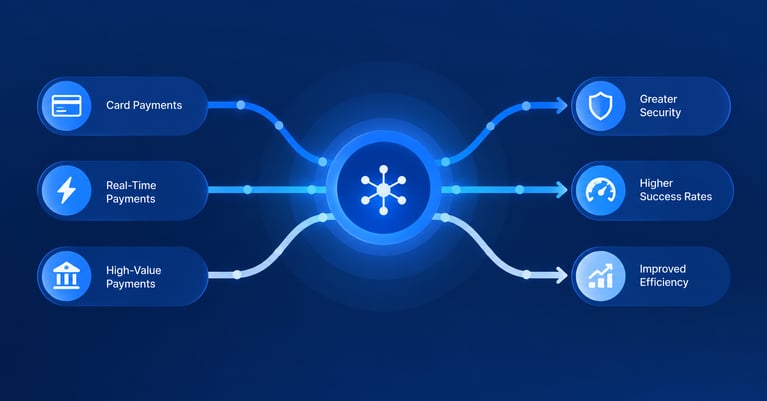
With real-time analytics across card payments, real-time payments, and high-value payment environments, IR Transact delivers the business insights operations teams need to maintain performance.
Dashboards surface transaction success rates, processing latency, and failure trends, enabling teams to act before issues escalate.
Proactive issue detection and resolution
IR Transact's monitoring capabilities go beyond reactive alerting.
By establishing performance baselines and applying intelligent thresholds, the platform proactively surfaces early warning signals, giving teams time to investigate and resolve issues before they impact customers or breach SLA commitments.
Free POS monitoring tools vs enterprise-grade solutions
Free and low-cost POS software, including open-source options and SMB platforms with basic monitoring dashboards — can be appropriate for small businesses managing a single location with limited transaction volumes.
These tools monitor traditional POS systems, and offer basic sales data, stock levels tracking, and simple reporting. But they don't provide the depth of transaction analytics or payment infrastructure visibility required by enterprise organizations.
Enterprise observability platforms like IR Transact operate on a custom pricing model based on transaction volume, environment complexity, and the number of payment systems integrated.
While the upfront investment is higher than free tools, the return in terms of prevented downtime, recovered revenue, and reduced operational overhead, is measurable and well-documented in enterprise deployments.
Total cost of ownership for POS monitoring software
When evaluating the total cost of ownership, organizations should account for:
- Implementation and integration costs
- Ongoing licensing or subscription fees
- Internal IT resource requirements
- Training and onboarding,
- The cost of incidents that adequate monitoring would have prevented.
For high-volume payment environments, the cost of a single major outage in lost revenue, regulatory exposure, and reputational damage, typically far exceeds the annual cost of an enterprise monitoring platform.
Organizations should also assess whether a point solution (covering only device management) is enough, or whether full payment observability, including transaction monitoring, gateway health, and settlement tracking would be best for their operating environment.
Management & workflow features
Remote monitoring
A core feature of enterprise POS monitoring platforms is the ability to remotely access and manage POS systems without the need for technicians to be present at physical locations.
Mobile Device Management (MDM) for POS systems ensures that devices are securely configured, monitored, and updated remotely, helping businesses enforce security policies and manage software updates.
Remote monitoring allows operations teams to diagnose technical issues, review device logs, push configuration updates, and restart services, all from a central console. This capability dramatically reduces mean time to resolution (MTTR) and lowers the cost of routine maintenance across distributed POS estates.
Device management
For organizations managing hundreds or thousands of POS devices across retail and hospitality industries, remote management isn't a convenience - it's an operational necessity.
The ability to resolve issues across multiple stores from a single platform saves money, reduces customer impact, and enables smaller operations teams to manage larger infrastructure footprints effectively.
POS monitoring systems track employee performance, including sales numbers and attendance, to optimize staffing levels.
Automated reorder points prevent stockouts by triggering alerts or generating purchase orders when inventory reaches threshold levels.
Integration with payment gateways and infrastructure
Modern POS environments are rarely simple. A typical enterprise deployment integrates POS terminals with payment gateways, card networks, fraud detection systems, loyalty platforms, inventory management systems, and ERP back-ends.
Effective monitoring software must integrate with this broader ecosystem to provide meaningful visibility.
Platforms that offer native integrations with major payment gateways and infrastructure components allow organizations to monitor not just the POS device, but the complete chain of systems that support each transaction.
This integration depth is a key differentiator between consumer-grade POS software and enterprise observability solutions.
POS security
Individual tool & solution reviews
The following overview covers the leading POS and payment monitoring tools across SMB, device management, and enterprise observability categories.
|
Tool |
Type |
Best For |
Key Limitation |
|
Loyverse |
SMB POS software |
Small retail & hospitality |
No enterprise monitoring or payment analytics |
|
Square POS |
SMB POS platform |
Single-location small business |
Limited multi-location control, no payment flow visibility |
|
Scalefusion |
MDM / device management |
POS device fleet management |
Focused on devices, not payment transaction health |
|
Esper |
Enterprise device management |
Mixed POS estate management |
Limited payment observability beyond device status |
|
TeamViewer |
Remote monitoring & support |
Centralized remote POS access |
Monitoring-lite; not built for transaction analytics |
|
IR Transact |
Enterprise payment observability |
End-to-end POS + payment monitoring |
Designed for enterprise scale; not SMB-targeted |
Decision framework: Choosing the right POS monitoring software
Selecting the right POS solution depends on your organization's size, payment complexity, and operational requirements. Use the framework below to identify which category of solution best fits your environment.
1. Small business vs enterprise needs
Small businesses operating from a single location with straightforward payment processing requirements are well served by platforms like Loyverse or Square POS. These tools provide intuitive dashboards, basic sales analytics, and sufficient monitoring for low-complexity POS environments.
Enterprise organizations, including financial institutions, retailers with multiple stores, payment processors, and financial institutions, require dedicated observability platforms.
The complexity of managing POS systems alongside payment gateways, processor connections, and real-time reporting at scale demands a purpose-built solution.
2. Single location vs multi-location environments
If your business operates from a single location, most POS software packages include adequate monitoring capabilities. The moment you scale to multiple locations, centralized visibility becomes non-negotiable. A POS system issue at one location should be surfaced centrally, not discovered by a manager walking the floor.
3. Device monitoring vs full payment observability
If your primary concern is device health, keeping terminals online, managing software updates, enforcing security policies across your POS estate, an MDM-centric solution like Scalefusion or Esper may be sufficient.
If your concern extends to transaction health - that is, understanding why payments are failing, where latency is building up, which payment gateway connections are degrading, then you need a platform that monitors the full payment flow, not just the endpoint device.
3. When to move to enterprise-grade monitoring
There are several key triggers that indicate an organization has outgrown basic POS tools:
- Recurring transaction failures that are hard to diagnose
- Increasing customer complaints about payment issues
- Difficulty attributing performance problems to specific components
- Regulatory pressure around payment data security
- Growth in transaction volume or geographic footprint that strains existing monitoring capabilities.
"The organizations that manage payments complexity most effectively are those that invest in observability before a crisis forces their hand. Reactive monitoring is always more expensive than proactive control." — IR Payments Observability Team
Want to find out more about how to manage the evolving complexities of your payments environment?
Download our essential guide
Frequently Asked Questions
Q. What is POS monitoring software?
A. POS monitoring software is a platform that provides real-time visibility into the performance, availability, and health of point-of-sale systems, devices, and payment transactions. It helps businesses detect and resolve issues quickly, maintain compliance, and ensure seamless customer experiences.
Q. How is POS monitoring different from POS systems?
A. A POS system is the combination of hardware and software used to complete transactions, including the terminal, card reader, and POS software.
POS monitoring is an additional layer that observes and analyzes the performance of those systems, providing insight into whether they are functioning correctly and efficiently.
Q. Can POS monitoring software track transactions in real time?
A. Yes. Enterprise-grade POS monitoring platforms track transaction flows in real time, capturing authorization rates, response times, failure codes, and gateway performance across all connected POS devices and payment systems.
Q. What security features should POS monitoring software include?
A. Key security features include: anomaly detection and alerting, access logging, PCI DSS compliance support, endpoint security monitoring, encryption verification, and the ability to detect unauthorized access or unusual transaction patterns across POS terminals.
Q. How does POS monitoring help prevent downtime?
A. By continuously monitoring device health, transaction performance, and system connectivity, POS monitoring software surfaces warning signals before they escalate into outages. Proactive alerting allows operations teams to resolve issues in advance, often before customers are affected.
Q. What industries benefit most from POS monitoring?
A. Enterprise retail chains, banks and financial institutions, payment processors, hospitality groups, healthcare providers, and transportation operators all benefit significantly from POS monitoring. Any organization where payment availability is critical to business operations.
Q. Is POS monitoring software cloud-based or on-premise?
A. Both deployment models exist. Cloud-based POS monitoring offers scalability, reduced infrastructure overhead, and centralized access for distributed environments. On-premise solutions offer greater control over data residency and may be required in regulated industries. Enterprise platforms like IR Transact support both deployment models.
Q. How does POS system monitoring connect to payment systems?
A. Enterprise monitoring platforms integrate directly with payment gateways, card networks, processors, and back-end settlement systems via APIs and native connectors. This integration allows the platform to monitor the complete payment chain, from POS terminal to final settlement, ather than just the device layer.